Real EstateAugust 31, 2026
Mistakes Property Investors Make After Buying in Dubai
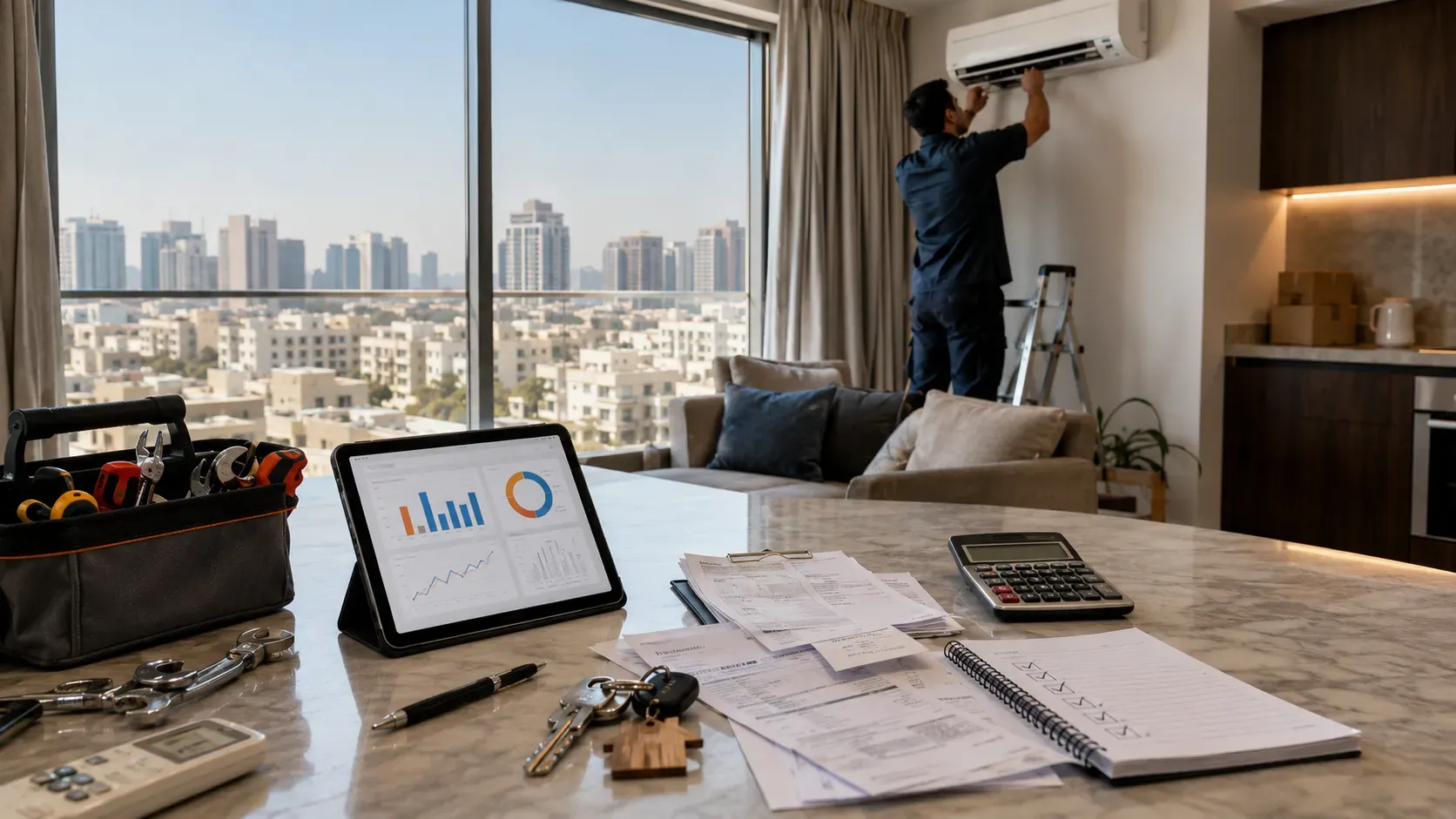
Buying an investment property is only the beginning. Once the purchase is completed, the investor still needs to manage the property, monitor rental income, control expenses, maintain the unit and respond to changes in the market.
Many property investors focus heavily on finding the right property and then become less involved after completing the purchase. This can lead to missed rental opportunities, unnecessary expenses, maintenance problems and weaker investment performance.
Dubai's property market also requires ongoing attention. The market is becoming more selective, with different property segments and locations performing differently. That makes it increasingly important for investors to monitor their individual properties rather than assuming that the overall market will automatically protect their investment.
Whether you own one apartment or a growing portfolio, avoiding common post-purchase mistakes can make a significant difference to your long-term returns.
Why Property Management Matters After Buying an Investment Property
One of the biggest mistakes investors make is assuming that purchasing the property is the difficult part.
In reality, the work continues after completion.
An investment property needs ongoing attention to:
- Rental income
- Tenant communication
- Maintenance
- Service charges
- Insurance
- Vacancies
- Lease renewals
- Property condition
- Market rental rates
- Financial records
If you own the property personally and manage it yourself, you need to keep track of these areas. If you use a property management company, you still need to monitor its performance.
DLD's Dubai REST platform allows property owners to access information about their properties, including current prices, rental returns and service charges, while also providing lease-management and rental-index services.
The important point is that property ownership should be treated as an ongoing investment activity, not a one-time transaction.
Ignoring Actual Rental Income and Cash Flow
Another common mistake is relying on the rental income originally estimated before purchasing.
Projected rent and actual rent can be different.
After purchasing, track:
- Actual annual rent
- Vacancy periods
- Service charges
- Maintenance costs
- Property management fees
- Insurance
- Mortgage payments
- Other recurring expenses
This allows you to calculate the property's actual net cash flow.
For example, an apartment may generate AED 70,000 in annual rent, but after service charges, maintenance, management and vacancy, the amount remaining for the investor may be significantly lower.
Do not judge a property purely by its advertised rental yield.
Instead, calculate what the property actually produces after expenses.
DLD's Rental Index can help investors review average rental information and applicable rental increases based on factors including location, property type and current rental information.
Failing to Budget for Dubai Property Service Charges
Service charges are an important ongoing expense, particularly for apartments and other jointly owned properties.
Some investors pay close attention to the purchase price and expected rent but overlook the annual cost of maintaining shared facilities.
DLD explains that service charges can cover areas such as management, operation, maintenance, repairs, insurance, utilities and reserve charges for jointly owned properties.
The actual amount varies between projects.
DLD's Service Charge Index allows owners to check approved service charges for jointly owned properties by selecting the relevant project, usage and year.
This matters when calculating your net return.
A property with attractive gross rental income may produce a less impressive net return after recurring service charges.
Investors should therefore include service charges in their annual investment review rather than treating them as an unexpected expense.
Delaying Property Maintenance and Repairs
Small maintenance problems can become expensive if they are ignored.
A minor water leak, air-conditioning problem or electrical issue may become a much larger repair if it is not addressed quickly.
Regular maintenance can help protect:
- Property condition
- Tenant satisfaction
- Rental income
- Resale appeal
- Long-term asset value
DLD guidance states that, unless otherwise agreed in the tenancy contract, the landlord is generally responsible during the lease term for maintenance works and repairing defects or damage that affect the tenant's intended use of the property.
Investors should therefore establish a clear maintenance process.
Keep records of:
- Repair dates
- Contractor details
- Costs
- Replacement parts
- Recurring problems
- Major improvements
This makes it easier to identify properties with unusually high maintenance costs.
Choosing the Wrong Tenant or Ignoring Tenant Management
A property can be financially attractive but still become difficult to manage if tenant relationships are handled poorly.
Investors should avoid treating tenant management as an afterthought.
Good management involves:
- Clear tenancy agreements
- Proper documentation
- Timely communication
- Regular maintenance
- Correct rental registration
- Proper handling of renewals
- Prompt response to legitimate issues
DLD states that lease contracts are registered through Ejari and provides services for registration, renewal and cancellation.
Investors should also understand the rules governing rent increases.
DLD states that rent increases can be based on the Rental Index and that the tenant should receive the required prior notice.
Trying to maximise rent without considering tenant retention can also be counterproductive.
A short vacancy can eliminate the benefit of a higher asking rent.
Not Monitoring Rental Market Changes in Dubai
Rental conditions can change.
An investor who sets the rent once and never reviews it may eventually price the property incorrectly.
If the asking rent is significantly above comparable properties, the property may take longer to rent.
If it is significantly below the market, the investor may be leaving income on the table.
DLD's Rental Index provides a useful official reference for rental information and potential rental increases.
Investors should periodically compare their property with similar units based on:
- Location
- Property type
- Number of bedrooms
- Size
- Building quality
- Amenities
- Furnishing
- Condition
- Current rental levels
The goal is not necessarily to charge the highest possible rent.
It is to maintain a competitive rental position while protecting occupancy and long-term returns.
Assuming Property Prices Will Always Increase
Property appreciation should never be treated as guaranteed.
Dubai has experienced substantial periods of growth, but real estate markets move through different cycles.
An investor who assumes prices will always rise may:
- Overpay for a property
- Ignore weak rental performance
- Delay necessary decisions
- Take excessive debt
- Hold an underperforming property for too long
Recent market reporting indicates that Dubai's residential market has entered a more selective phase, with activity becoming more measured in some segments.
This makes property-level analysis particularly important.
Instead of asking only whether Dubai property prices are rising, ask:
Is my specific property performing well relative to comparable properties?
That is a much more useful investment question.
Ignoring Vacancy and Tenant Turnover Costs
A property that generates AED 60,000 in annual rent does not necessarily produce AED 5,000 every month.
There may be periods between tenants.
During vacancy, you may still have:
- Mortgage payments
- Service charges
- Maintenance expenses
- Insurance
- Management costs
Tenant turnover can also create additional expenses.
These may include:
- Cleaning
- Painting
- Repairs
- Marketing
- Property management
- Minor replacements
When calculating expected returns, include a realistic vacancy allowance rather than assuming the property will remain occupied continuously.
This becomes even more important when you own several properties.
A vacancy in one property may be manageable.
Multiple vacancies at the same time can significantly affect portfolio cash flow.
Managing an Investment Property Without Proper Records
Poor record-keeping can make it difficult to understand whether a property is actually profitable.
Maintain a separate financial record for every property.
Track:
- Purchase price
- Purchase date
- Financing
- Rental income
- Service charges
- Maintenance
- Management fees
- Insurance
- Vacancy
- Renovation costs
- Major repairs
- Current estimated value
- Outstanding mortgage
This information allows you to calculate actual performance.
It also helps when comparing different properties in your portfolio.
A property that looks attractive based on rental income may turn out to be one of your weaker assets after all expenses are included.
Failing to Review Mortgage and Financing Costs
Financing can significantly influence property investment returns.
Investors sometimes focus on the property's rental income while paying less attention to the cost of borrowing.
Review your financing periodically and understand:
- Outstanding loan balance
- Monthly repayment
- Interest or profit rate
- Remaining loan term
- Early settlement conditions
- Effect on overall cash flow
If you own several properties, look at your total portfolio debt rather than evaluating each mortgage independently.
A property may have acceptable cash flow on its own but become problematic when combined with several other heavily financed properties.
Not Reviewing Property Performance Regularly
Buying a property and leaving it untouched for years is another common mistake.
At least periodically, review:
Rental Performance
Compare actual rent with current market levels.
Net Cash Flow
Check whether the property still produces the expected return after expenses.
Property Condition
Identify repairs before they become major problems.
Market Value
Monitor comparable properties and recent transactions.
Service Charges
Check whether recurring ownership costs have changed.
Tenant Situation
Review lease terms, renewal dates and tenant issues.
Investment Objective
Ask whether the property still fits your long-term strategy.
DLD's Dubai REST platform provides owners with access to property-related information including rental returns, current prices and service charges, which can assist with ongoing monitoring.
Expanding a Dubai Property Portfolio Too Quickly
A successful first investment can make investors confident about buying another property.
But expanding too quickly can create unnecessary risk.
Before purchasing another property, consider whether you have:
- Sufficient cash reserves
- Manageable debt
- Stable rental income
- Adequate financing capacity
- Time to manage another property
- A clear reason for expanding
Your second property should ideally strengthen your portfolio rather than simply increase the number of properties you own.
For example, if your first two properties are both similar apartments in the same building, buying a third identical unit may increase concentration risk.
Read How Many Properties Should You Own? when reviewing whether your portfolio has reached a manageable size.
Mistakes to Avoid When Hiring a Property Management Company
A property management company can make ownership easier, but hiring one does not mean you can stop monitoring the investment.
Before appointing a company, understand:
- Management fees
- Services included
- Maintenance procedures
- Tenant communication
- Inspection frequency
- Rent collection
- Lease renewal process
- Emergency response
- Reporting
- Contractor arrangements
Do not choose a management company based only on the lowest fee.
A cheaper service may not provide the same level of communication or maintenance management.
Ask how often you will receive financial reports and how maintenance expenses are approved.
You should always retain visibility over the property's performance.
Dubai Property Investor Checklist After Buying
Use this checklist after completing an investment property purchase:
Task | Recommended Action |
|---|---|
Rental income | Track actual income monthly |
Lease | Keep the tenancy agreement and Ejari records organised |
Rental level | Review against current market information |
Service charges | Check approved charges and payment status |
Maintenance | Address issues promptly |
Tenant communication | Maintain clear records |
Vacancy | Track every vacant period |
Mortgage | Monitor monthly financing costs |
Property value | Review comparable market activity |
Expenses | Record all property-related costs |
Insurance | Check coverage and renewal dates |
Portfolio | Review overall performance regularly |
This simple system can help investors identify problems before they become expensive.
Frequently Asked Questions About Property Investment Mistakes
What is the biggest mistake property investors make after buying?
One of the biggest mistakes is assuming the property will automatically perform as expected without monitoring rental income, expenses, maintenance and market conditions.
Should I manage my Dubai investment property myself?
It depends on your time, experience and portfolio size. Self-management can work for some investors, while professional management may be useful for owners with multiple properties or limited availability.
Who pays property service charges in Dubai?
For jointly owned properties, the owner is responsible for the applicable service charges. DLD explains that these charges cover various management, operation, maintenance and repair costs associated with common facilities.
How can I check Dubai property service charges?
DLD provides a Service Charge Index where users can check approved charges for eligible jointly owned properties by selecting the relevant project, usage and year.
How can I check whether I can increase my property's rent?
DLD's Rental Index can be used to calculate rental increases and review average rental information based on property and location details.
Should property investors worry about vacancy?
Yes. Vacancy can reduce rental income while many ownership costs continue. Investors should include realistic vacancy assumptions when calculating returns.
How often should I review my investment property?
A regular financial and operational review is useful. Track rental income, expenses, tenant status, maintenance, service charges and market conditions rather than waiting until you decide to sell.
Should I buy another property if my first one is performing well?
Not automatically. Review your available capital, debt, cash reserves and portfolio diversification before expanding. The next property should have a clear purpose within your overall investment strategy.
Final Thoughts
Buying a Dubai investment property is only the beginning of the investment journey.
The mistakes that happen after buying property can have just as much impact on returns as the decisions made before purchase.
Investors should monitor rental income, manage tenants properly, maintain the property, budget for service charges, account for vacancies and keep accurate financial records.
They should also avoid assuming that property values or rents will always rise.
Dubai's real estate market remains active, but current market conditions are increasingly selective across different sectors and locations. That makes ongoing property-level analysis more important than simply relying on general market optimism.
The best approach is to treat every property as an actively managed investment.
Review its income.
Review its expenses.
Review its condition.
Review its market position.
And most importantly, review whether it is still helping you achieve your long-term investment goals.
For more Dubai real estate investment guides, buying advice and property insights, visit Buy Home Dubai.

Dubai Real Estate
Ready to find your
dream home in Dubai?
Browse thousands of properties across Dubai's most sought-after neighbourhoods. Our experts are ready to guide you.