Real EstateSeptember 16, 2026
Buying a Tenanted vs Vacant Property in Dubai: Which Should You Choose?
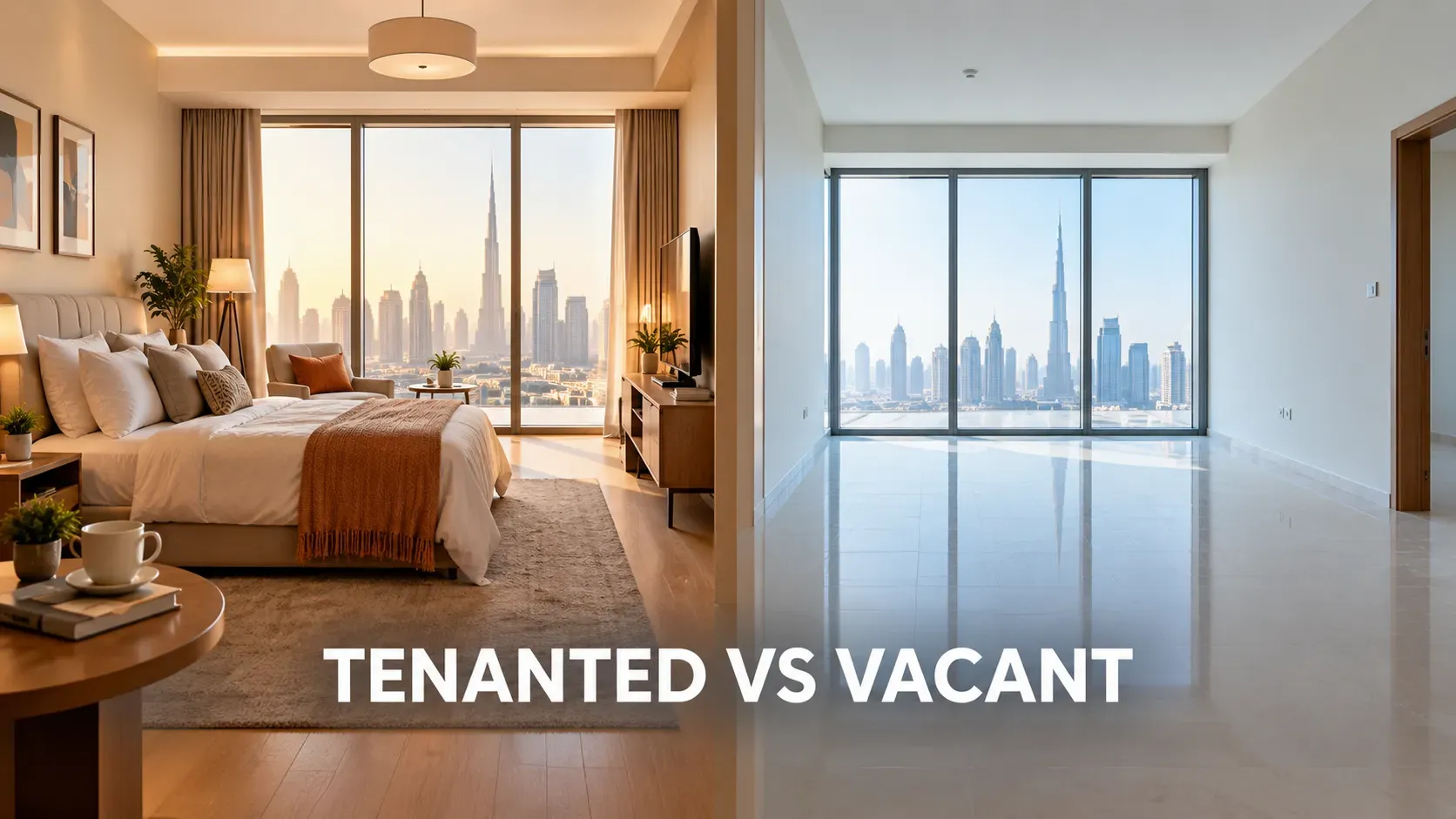
You've found a unit you like. The price is right, the location works, and then you spot one line in the listing: "sold tenanted." Suddenly you're wondering whether you just found a great deal or inherited someone else's problem.
It's one of the most common forks in the road for anyone buying property in Dubai, and almost nobody explains it clearly before you're standing in front of a Sale and Purchase Agreement. So let's fix that.
Quick Answer
A tenanted property in Dubai comes with an existing lease that you, as the new owner, are legally required to honor until it expires. A vacant property has no lease attached, so you get immediate possession. Tenanted units usually suit investors who want rental income from day one, while vacant units suit anyone planning to move in themselves or renovate before renting it out.
Key Takeaways
- The lease is attached to the property, not the seller, so it automatically transfers to you when you buy a tenanted unit.
- You cannot evict a tenant simply because ownership changed hands.
- If you need vacant possession, Dubai law requires a minimum 12-month written notice for personal use.
- Tenanted units often sell at a slight discount and deliver instant rental yield, which appeals to pure investors.
- Vacant units give you full control over timing, but you'll wait for your first rental cheque.
What Does "Tenanted" Actually Mean in a Dubai Property Sale?
A tenanted property simply means someone is already living in it under a registered tenancy contract when you buy it.
That contract doesn't end when the title deed changes hands. It runs its full course, whatever term is left, exactly as it was signed with the previous owner.
Listings usually flag this clearly ("sold tenanted" or "vacant on transfer"), but it's worth confirming directly with the agent before you make an offer, since the difference changes your entire timeline.
What Happens to the Existing Lease When You Buy?
This is the part that catches new buyers off guard: you don't get to renegotiate or cancel the lease just because you're now the owner.
Under Dubai's tenancy framework, a tenancy contract is tied to the unit itself, not to whoever happens to own it. When a property sells mid-lease, the Dubai Land Department's Ejari system simply updates the registered owner while the lease terms carry on unchanged.
In practice, this means:
- The tenant keeps paying the same rent, on the same schedule, until renewal.
- You inherit the security deposit arrangement from the seller (this is usually settled between buyer and seller at transfer, not with the tenant).
- You can't raise the rent mid-term, only when the contract comes up for renewal, and only within RERA's rental index limits.
- You can't ask the tenant to leave without following the legal notice process, covered further down.
Tenanted Property: The Pros and Cons for a Buyer
Pros | Cons |
|---|---|
Rental income starts immediately, no vacancy gap | You can't move in or renovate right away |
Often priced slightly below comparable vacant units | You're bound by rent terms you didn't negotiate |
Ejari and tenant history give you a track record of occupancy | Evicting a difficult tenant takes time and paperwork |
Attractive to mortgage lenders as proof of rental demand | You inherit whatever maintenance issues the tenant hasn't reported yet |
For a buy-to-let investor, several of those "cons" barely matter since the goal was rental income anyway.
Vacant Property: The Pros and Cons for a Buyer
Pros | Cons |
|---|---|
Immediate possession, move in or rent out on your own terms | No rental income until you find a tenant yourself |
Freedom to renovate, upgrade, or reconfigure before anyone lives there | You absorb the vacancy period and marketing costs |
No inherited lease terms or tenant history to review | Usually priced at a small premium over tenanted equivalents |
Simpler, faster handover process | You start from zero on building a rental track record |
If you're buying to live in it, vacant possession isn't just preferable, it's usually the only sensible option.
Which One Wins for a Pure Investor?
For an investor thinking purely in yield terms, tenanted often comes out ahead. You skip the vacancy period entirely, which is where a lot of first-year returns quietly get eaten up.
It also gives you real data instead of guesswork. A tenant already paying market rent tells you exactly what the unit earns, rather than relying on an agent's optimistic estimate.
The trade-off is flexibility. If you want to reposition the unit (short-term rental, a full renovation, a different target tenant profile), a vacant property gives you a faster path to that. It's worth running the numbers on how gross and net rental yield actually differ before deciding which trade-off matters more to you.
Which One Wins If You Plan to Live in It Yourself?
If this is going to be your home, vacant is almost always the right call. Waiting out an existing tenant's lease term, which could be anywhere from a few months to nearly a year, delays your own move-in date.
There's one exception worth knowing: some buyers deliberately choose a tenanted property, let the existing lease run its course for the rental income, and move in once it ends. That only works if you're not in a hurry and you've read the full rules on renting out your own property so you understand what you're allowed to do with the unit in the meantime.
How to Remove a Tenant After You Buy
If you buy tenanted and later decide you want the unit for yourself, you can't simply ask the tenant to pack up.
Dubai law requires:
- A minimum 12-month written notice, sent by registered mail or notary public.
- A valid legal reason (personal use by you or a first-degree relative, or a decision to sell the property).
- The notice must be served ahead of the contract's renewal date, not mid-term.
Skip any of these steps and the tenant has every right to stay, and to dispute an improper eviction through Dubai's Rental Dispute Center. Some buyers avoid the wait entirely by negotiating an early move-out directly with the tenant, often in exchange for covering their moving costs.
Does It Change Your Financing?
Not usually, but it can work in your favor. Most Dubai mortgage lenders view a tenanted unit with a solid rental history as lower risk, since it already has a proven income stream attached to it.
That said, financing structure and repayment comfort still come down to your own numbers. If you're weighing this alongside how you'll actually fund the purchase, our breakdown of mortgage versus cash purchases is worth reading before you commit either way.
Frequently Asked Questions
Do I inherit the tenant when I buy a tenanted property in Dubai?
Yes. The lease belongs to the property, not the previous owner, so it automatically continues under your name as the new landlord until it expires or is properly ended.
Can I evict a tenant right after buying their unit?
No. Buying the property doesn't give you grounds to evict. You still need a valid legal reason and a minimum 12-month written notice before the tenant is required to leave.
Is a tenanted property cheaper than a vacant one in Dubai?
Often, yes, by a modest margin. Sellers sometimes price tenanted units slightly lower because the buyer pool is smaller (fewer people want to wait out an existing lease).
Does a tenanted property affect my mortgage approval?
Generally not negatively. Many lenders actually view an existing, well-documented tenancy as a positive sign of rental demand for the unit.
What happens to the Ejari contract when the property is sold?
The Ejari registration is updated to reflect the new owner's details, but the lease terms, rent amount, and expiry date all stay exactly as they were.
Choosing With Confidence
There's no universally "right" answer here, only the right answer for what you're trying to do. If you want rental income from the day you sign, tenanted works in your favor. If you want the keys in your own hand as soon as possible, vacant is worth the small premium.
Either way, you're now equipped to ask the right questions before you make an offer, and that's exactly the kind of informed decision BuyHomeDubai helps buyers make with confidence.

Dubai Real Estate
Ready to find your
dream home in Dubai?
Browse thousands of properties across Dubai's most sought-after neighbourhoods. Our experts are ready to guide you.