Real EstateOctober 27, 2026
Do You Need Permission to Renovate Your Dubai Apartment or Villa?
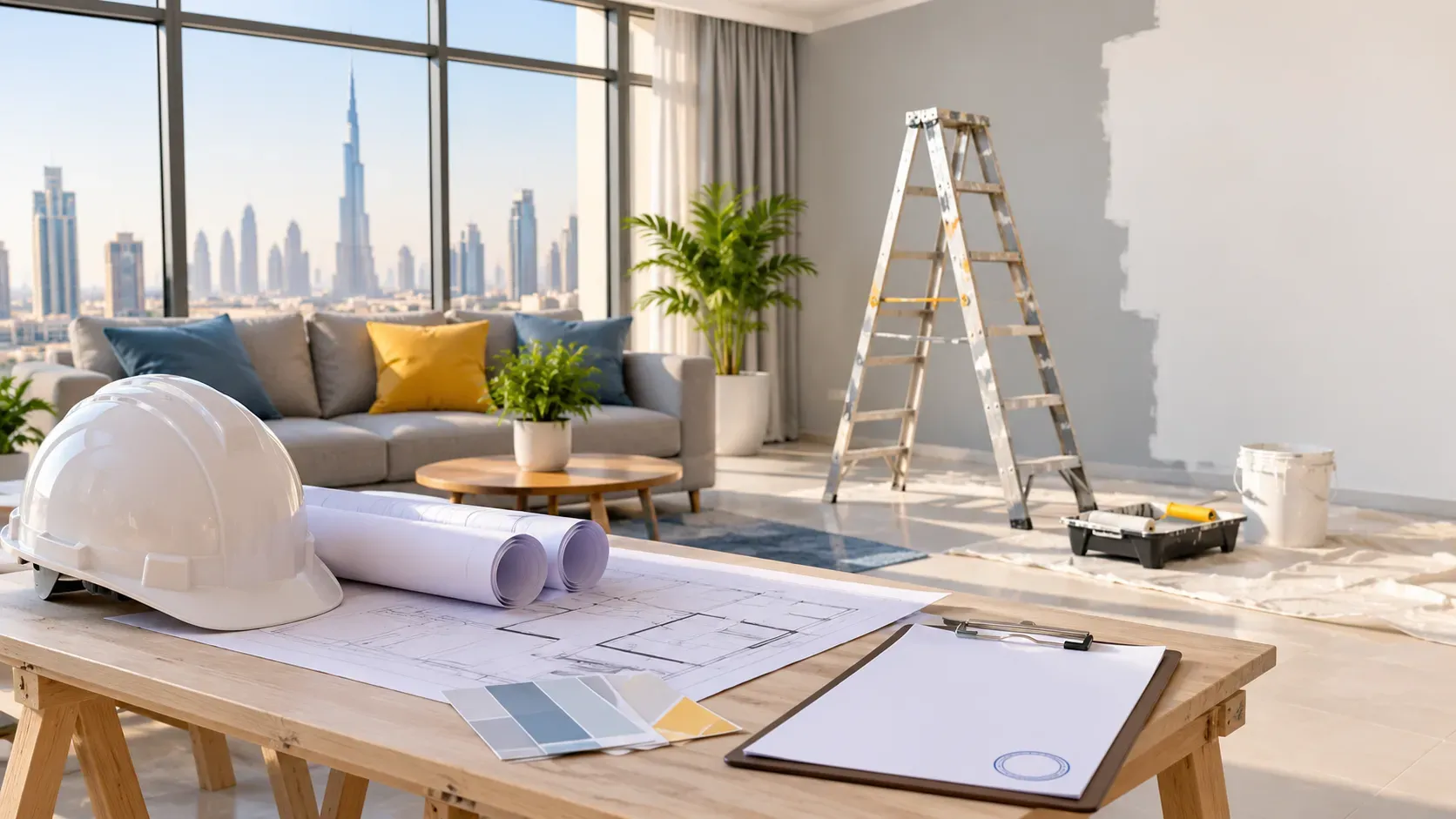
Your contractor is booked, the tiles are chosen, and the kitchen design is final. Then your building manager asks one question: "Where is your NOC?"
Renovation permission in Dubai catches a lot of owners off guard. Even a simple-looking job can need sign-off from your building, your master developer or the municipality, and starting without it can stop your project in its tracks.
This guide shows you when you need permission, who gives it, and how to get it without wasting weeks.
Quick Answer
In most cases, yes. Cosmetic work usually needs only your building's consent, but structural, plumbing, electrical or external changes need an NOC from your building management or master developer plus a Dubai Municipality permit. Always check with your building before any work begins.
Key Takeaways
- Apartments need approval from the building management, and villas in master communities need approval from the master developer.
- Structural, plumbing, electrical and external changes usually also need a Dubai Municipality permit.
- Only licensed consultants and contractors can submit and carry out permitted work.
- Unapproved work can lead to stop-work orders, fines and lost deposits.
- Start early, because approvals can take from a week to several weeks.
Do You Need Permission to Renovate in Dubai?
Yes, for most work beyond simple decorating. Dubai owners can't simply start building. Depending on the job, you may need consent from your building management or master developer, a building permit from the municipality, or both.
Purely cosmetic changes, such as painting or changing furniture, are generally fine. Anything that touches walls, pipes, wiring, windows, balconies or the outside of the building usually needs formal approval.
When in doubt, ask in writing before you hire anyone. A quick email now is much cheaper than a stop-work order later.
What Counts as Minor Work and What Counts as Major Work?
The dividing line is how much the work affects the building. This table shows the usual pattern, though your building's own rules always come first:
Type of work | Examples | What you usually need |
|---|---|---|
Cosmetic | Painting, wall decor, curtains, furniture | Usually no permit, but tell your building if contractors will enter |
Surface and fixtures | New flooring, replacing cabinets, swapping bathroom fixtures | Often a building NOC or work permit |
Plumbing, electrical and AC | Moving pipes, rewiring, changing AC layouts | Building NOC, and often a Dubai Municipality permit |
Structural | Removing or adding walls, merging units | NOC, municipality permit and drawings from a licensed consultant |
External | Facade, balcony, windows, pergolas, villa extensions | Master developer or management approval, plus a municipality permit |
Flooring and kitchens can surprise people. Many buildings require a work permit even for jobs that don't change the structure, partly to protect neighbours from noise and common areas from damage.
Who Gives Renovation Permission in Dubai?
Approval usually comes from two directions, and you need both before you start.
1. Your building or community (the NOC)
- Apartments: the building's management company or owners' body.
- Villas: the master developer, such as the one that built your community.
This is a No Objection Certificate for the work, and it is different from the NOC you need when selling. If that is new to you, see what an NOC is in Dubai property.
2. The government authority (the permit)
On most mainland properties, the building permit comes from Dubai Municipality, applied for through its online building permit system. Some districts have their own authority, and some master communities have their own process, so ask your building which applies to you.
A licensed consultant or contractor normally submits the application and the drawings on your behalf.
Apartment vs Villa: How the Rules Differ
The main difference is who you answer to.
- Apartments: you share walls, ceilings, pipes and common areas, so the building management controls what you can do and when. Rules cover work hours, lift use and protection of common areas.
- Villas: you have more freedom inside, but master developers set strict design rules for extensions, exteriors and gardens. As Gulf News has reported on villa community rules, villa owners must get approval before modifying their homes, and significant improvements also need municipality approval.
If you're planning a villa extension, expect the developer to review the design before the municipality ever sees it.
How to Get Renovation Permission in Dubai Step by Step
Follow this order to avoid delays:
- Read your building or community rules. Look for a renovation guideline or fit-out policy.
- Define the scope. Write down exactly what you want to change.
- Hire licensed professionals. Use a registered consultant and contractor.
- Apply for the NOC. Submit drawings and the contractor's details to your building or developer.
- Apply for the municipality permit, if needed. Your consultant submits it once the NOC is in hand.
- Pay any deposit and arrange insurance. Buildings often ask for a refundable deposit and contractor insurance.
- Work within the rules. Follow approved hours, delivery times and waste disposal rules.
- Close out the permit. Arrange the final inspection and claim back your deposit.
Keep copies of every approval. You may need them later when you sell, rent or insure the property.
What Does Approval Cost and How Long Does It Take?
Costs and timelines vary by community, so treat these as rough guides:
- NOC: often takes from about a week to a few weeks, depending on the building.
- Municipality permit: fees depend on the type and size of the work and are usually in the low thousands of dirhams for interior jobs.
- Deposit: many buildings ask for a refundable deposit, and the amount varies.
- Consultant and contractor fees: these are separate from government fees.
Ask your building for a written fee list and expected timeline at the very start.
What Happens If You Renovate Without Approval?
Unapproved work can cause serious problems. Consequences can include:
- A stop-work order from the building or authorities
- Fines
- Loss of your deposit
- Being told to undo the work at your own cost
- Trouble selling, renting or insuring the property
It's also a safety issue. Changes to walls, wiring or plumbing that haven't been checked can put neighbours and the building at risk.
Can Tenants Renovate a Rented Property?
Not without the landlord's written permission. Tenants generally need their landlord's consent before making physical changes, and the landlord may need to apply for the building NOC.
If you're a tenant, get permission in writing before you spend anything. If you're a landlord, it helps to know the wider rules, so see our guide to renting out your property in Dubai.
Renovating Before You Sell or Rent Out
Investors often renovate between tenants or before a sale. The approval time matters, because every week of waiting is a week without rent.
Here is how to protect your timeline:
- Apply for the NOC before the previous tenant leaves.
- Choose work your building approves quickly.
- Keep all permits and certificates for future buyers.
- Focus on upgrades that actually help value.
To decide which upgrades are worth the effort, see how to increase your property's resale value in Dubai.
FAQs
Do you need permission to renovate an apartment in Dubai?
Usually yes. Cosmetic work often needs only your building's consent, but work involving flooring, plumbing, electrical systems, walls or balconies typically needs an NOC from the building management, and often a Dubai Municipality permit.
Do you need a permit to renovate or extend a villa in Dubai?
Yes. Villas in master communities need approval from the master developer, and structural work and extensions usually need a Dubai Municipality building permit as well.
Who issues a renovation NOC in Dubai?
The building's management company or owners' body for apartments, and the master developer for villas in master communities. The NOC is separate from the government building permit.
What happens if you renovate without approval in Dubai?
You can face stop-work orders, fines, lost deposits and orders to reverse the work, and it can cause problems when you sell, rent or insure the property.
Can tenants renovate a rented property in Dubai?
Only with the landlord's written permission. The landlord may also need to get the building's NOC before work can begin.
Start With a Question, Not a Contractor
The smartest renovation begins with an email to your building. Once you know how renovation permission in Dubai works, you can plan the right approvals, set a realistic timeline and avoid costly stoppages.
If you're exploring your next property move, BuyHomeDubai is here to help you make decisions with confidence. This guide is general information, not legal advice, so confirm the current rules with your building management and the relevant authority.

Dubai Real Estate
Ready to find your
dream home in Dubai?
Browse thousands of properties across Dubai's most sought-after neighbourhoods. Our experts are ready to guide you.