Real EstateSeptember 5, 2026
Mixed-Use Communities in Dubai Explained
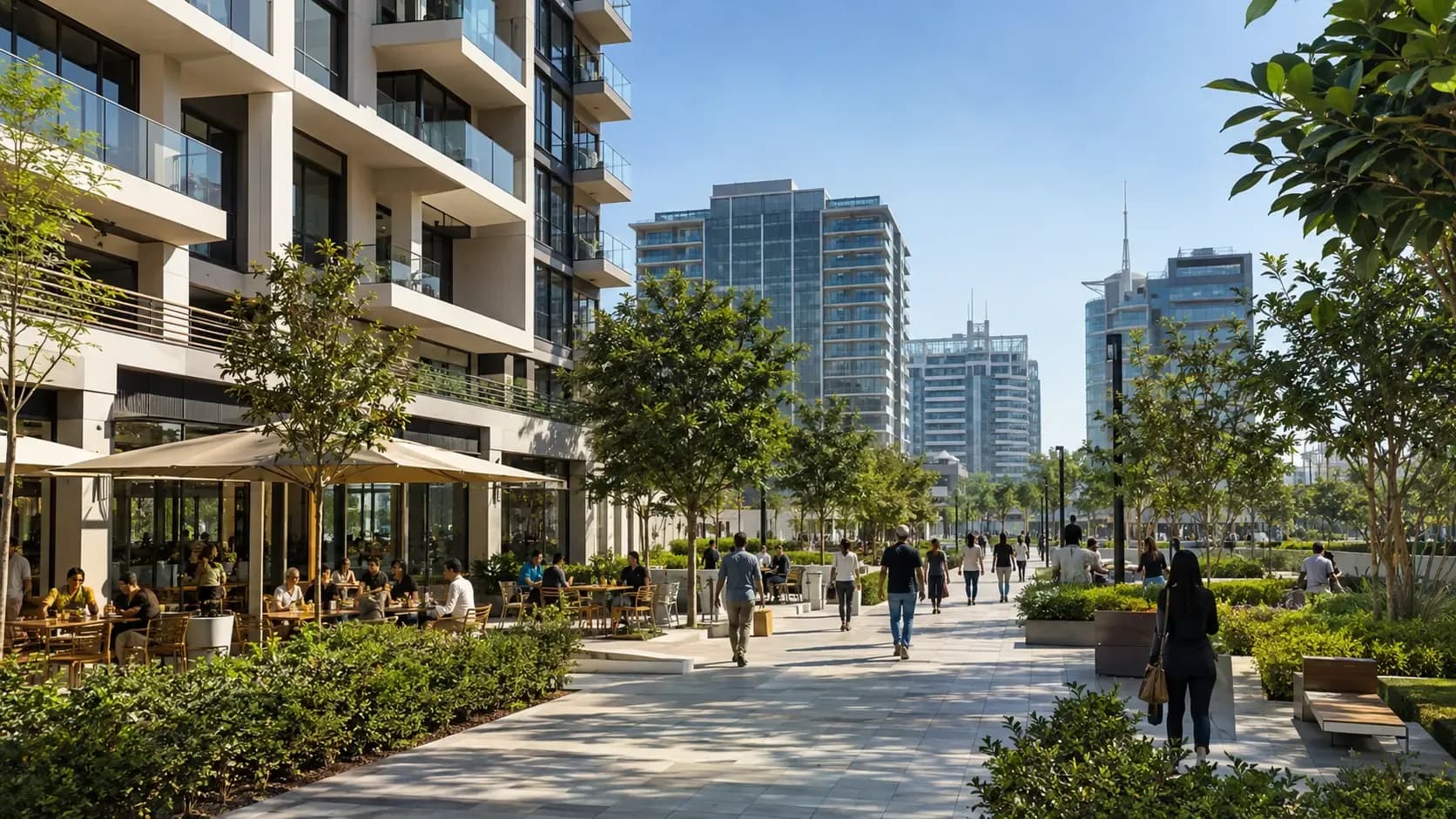
Dubai is known for communities where people can live, work, shop and spend their leisure time within the same neighbourhood. These developments are known as mixed-use communities and have become an important part of the city's residential landscape.
Unlike a traditional residential neighbourhood that mainly consists of homes, a mixed-use community combines different functions. Depending on the development, this can include apartments, offices, hotels, retail stores, restaurants, supermarkets, schools, parks and entertainment facilities.
This approach can make everyday life more convenient by reducing the need to travel long distances for work, shopping and leisure. It can also create different opportunities for property buyers and investors.
However, not every mixed-use community offers the same experience. Some are designed around business districts and high-rise apartments, while others focus more heavily on lifestyle, retail or family living.
Understanding how these communities work can help buyers decide whether a mixed-use area is suitable for their lifestyle and property goals.
Quick Answer
A mixed-use community in Dubai is a development or district that combines two or more major uses, such as residential, commercial, retail, hospitality and leisure facilities.
The main advantages can include:
- Convenient access to everyday services
- Shorter journeys between home, work and leisure
- Restaurants and shops nearby
- Public transport connectivity in some areas
- Walkable neighbourhoods
- Variety of property types
- Strong tenant appeal in some locations
Examples include Downtown Dubai, Jumeirah Lake Towers (JLT), City Walk and Dubai Hills Estate, although each has a different mix of residential, commercial and lifestyle facilities. JLT, for example, combines residential towers with offices, hotels, restaurants and retail, while City Walk combines residential properties with retail, dining, entertainment and leisure facilities.
What Is a Mixed-Use Community in Dubai?
A mixed-use community brings several types of development together rather than separating them into completely different districts.
A typical mixed-use development may include:
- Residential apartments
- Villas or townhouses in some developments
- Offices
- Hotels
- Retail outlets
- Restaurants and cafés
- Supermarkets
- Schools or nurseries
- Parks
- Gyms and sports facilities
- Entertainment venues
The idea is to create a neighbourhood where residents can access many daily requirements without travelling across the city.
The scale can vary considerably.
A mixed-use development could be a single complex containing residential and commercial buildings, or an entire district containing thousands of homes alongside offices, hotels, shops and entertainment destinations.
Jumeirah Lake Towers is a good example of the larger district model. It consists of 26 clusters containing residential, commercial and mixed-use towers, with restaurants, shops, hotels and other amenities integrated throughout the area.
How Do Mixed-Use Communities Work?
The basic principle is to place different activities close together.
For example, a resident might live in an apartment above or near shops, work in an office within the same district, and visit a nearby restaurant or fitness facility without making a long journey.
The different components generally support one another.
Residential
Apartments, villas or townhouses provide housing for residents.
Commercial
Offices provide workplaces for companies and professionals.
Retail
Supermarkets, convenience stores, boutiques and other shops serve residents, workers and visitors.
Hospitality
Hotels and serviced residences can bring additional visitors and businesses into the area.
Leisure
Restaurants, cafés, parks, gyms, entertainment venues and public spaces provide recreational options.
This combination creates a more active neighbourhood throughout the day rather than an area that is busy only during working hours.
Why Are Mixed-Use Communities Popular in Dubai?
One of the biggest attractions is convenience.
Dubai is geographically spread out, and commuting between residential, commercial and leisure districts can involve significant travel.
A well-designed mixed-use community can reduce some of that dependence on long journeys.
Everyday Convenience
Residents may have supermarkets, pharmacies, restaurants and cafés close to home.
Walkability
Some mixed-use developments are designed around pedestrian areas, promenades and public spaces.
City Walk, for example, uses an open-air layout with pedestrian boulevards, shops, cafés, restaurants and residential buildings.
Access to Work
Professionals may benefit when offices are located within or close to their residential community.
JLT is a strong example, with residential, commercial and hospitality uses concentrated around its lakes and connected road and public transport network.
Lifestyle
Residents can have restaurants, entertainment and recreational facilities close to their homes.
This is particularly attractive to people who prefer an active urban lifestyle.
Popular Mixed-Use Communities in Dubai
Dubai has several mixed-use districts, but they differ significantly in property type, location and lifestyle.
Downtown Dubai
Downtown Dubai is one of the city's most recognisable mixed-use developments.
It combines residential properties with commercial, hospitality, retail, leisure and cultural destinations. The area includes landmarks such as Burj Khalifa and Dubai Opera, alongside residential towers, hotels, serviced residences and retail destinations.
Its central location makes it particularly relevant to buyers who want access to Business Bay, DIFC and other central Dubai districts.
Jumeirah Lake Towers
JLT is one of Dubai's clearest examples of a mixed-use community.
The district combines apartments, offices, hotels, restaurants and retail spaces around three artificial lakes.
Its location along Sheikh Zayed Road and access to metro stations make connectivity one of its major advantages.
JLT can appeal to both residents and investors because people can live close to workplaces and everyday amenities.
City Walk
City Walk provides a different interpretation of mixed-use living.
It combines low-rise residential buildings with retail, restaurants, entertainment and leisure facilities. Its pedestrian-friendly layout is designed around outdoor spaces and walkable streets.
The area is particularly suited to people who prefer an urban lifestyle with restaurants, shopping and leisure facilities close to home.
Dubai Hills Estate
Dubai Hills Estate combines residential development with retail, recreation, healthcare, education and other community facilities.
Its mix of apartments, villas and townhouses gives it a broader residential profile than some high-rise mixed-use districts.
This type of master-planned development demonstrates that mixed-use living does not necessarily mean living in a dense central business district.
What Are the Benefits of Living in a Mixed-Use Community?
Mixed-use living can provide several lifestyle advantages.
Convenience
Having shops, restaurants and services nearby can reduce the need for frequent car journeys.
Reduced Commute
If your workplace is within the community or nearby, daily commuting can become easier.
More Amenities
Residents may have access to a broader selection of restaurants, gyms, shops and recreational facilities.
Active Environment
Mixed-use areas tend to remain active throughout the day because residents, workers and visitors use the same spaces.
Public Transport
Many mixed-use communities are positioned around major roads or public transport connections. JLT, for example, has access to Sheikh Zayed Road and metro stations.
Variety of Housing
Depending on the development, buyers can find studios, apartments, townhouses or villas.
Are Mixed-Use Communities Good for Families?
They can be, but the answer depends on the specific community.
Families may appreciate:
- Supermarkets nearby
- Schools and nurseries
- Healthcare facilities
- Parks
- Restaurants
- Community activities
- Easy access to everyday services
However, some mixed-use districts are more suited to professionals and couples than families.
A high-rise business-oriented district may have excellent restaurants and transport but less private outdoor space.
A master-planned community with villas, parks, schools and retail may offer a more family-oriented experience.
Families should therefore look beyond the term "mixed-use" and examine what facilities are actually available.
Are Mixed-Use Communities Good for Property Investment?
Mixed-use communities can be attractive to investors because they may appeal to several types of tenants.
A tenant might choose a property because it is close to:
- Their workplace
- Metro stations
- Restaurants
- Shopping
- Schools
- Entertainment
- Major roads
This can support rental demand in well-located developments.
Property Finder research has also highlighted demand for connected, lifestyle-oriented communities, particularly developments that combine amenities with transport accessibility and walkable environments. Its research found that such developments had historically recorded stronger price and rental growth than the broader market, although historical performance should not be treated as a guarantee of future returns.
For investors, however, the mixed-use label alone is not enough.
The actual investment case still depends on purchase price, rental income, service charges, vacancy risk, property quality, competing supply and future demand.
What Are the Disadvantages of Mixed-Use Communities?
Mixed-use living is not ideal for everyone.
More Activity and Noise
Restaurants, offices, hotels and entertainment venues can create more pedestrian and vehicle activity.
This may not suit buyers looking for a quiet suburban environment.
Traffic
Popular mixed-use areas can experience increased traffic during busy periods.
Higher Property Prices
Some mixed-use districts occupy premium locations and therefore command higher purchase or rental prices.
Limited Privacy
A community with significant retail, hospitality and commercial activity may feel less private than a low-density residential neighbourhood.
Service Charges
Properties with extensive amenities and facilities may have higher ownership costs.
Buyers should always check the service-charge structure before purchasing.
Different Building Experiences
In a large mixed-use district, the experience can vary considerably between buildings.
One tower may be predominantly residential, while another could contain offices, hotels or retail uses.
Mixed-Use Community vs Traditional Residential Community
Factor | Mixed-Use Community | Traditional Residential Community |
|---|---|---|
Main purpose | Living, working and leisure | Primarily residential |
Retail | Usually nearby or within development | May require travel |
Offices | Often integrated | Usually outside community |
Restaurants | Generally abundant | Varies |
Walkability | Often higher | Depends on area |
Traffic | Can be higher | Often lower |
Privacy | Can be lower | Often higher |
Amenities | Usually extensive | Depends on development |
Public transport | Often prioritised | Varies |
Lifestyle | Urban and active | Often quieter |
Investment appeal | Can benefit from diverse demand | Depends on location and property |
Neither model is automatically better.
The right choice depends on whether convenience and activity or privacy and quieter surroundings matter more to you.
How to Choose the Right Mixed-Use Community in Dubai
Before buying or renting, evaluate the community rather than simply choosing a popular name.
1. Check Your Commute
Look at the actual travel time to your workplace rather than relying only on the advertised location.
2. Examine Public Transport
If you do not want to depend heavily on a car, check the distance to metro stations, tram connections and bus routes.
3. Identify Everyday Amenities
Make a list of the facilities you actually use, such as supermarkets, pharmacies, gyms and restaurants.
4. Consider Noise and Activity
Visit the area during both daytime and evening hours.
A community can feel very different when restaurants and entertainment venues are busy.
5. Compare Property Types
Determine whether the community offers the property type and size you need.
6. Check Ownership Costs
Review service charges, maintenance expenses and other recurring costs before purchasing.
7. Research Future Development
New retail, residential or commercial projects can change traffic, supply and the overall character of an area.
8. Consider Resale and Rental Demand
If you are buying as an investment, investigate comparable properties, current rents and potential tenant demand.
Frequently Asked Questions
What is a mixed-use community in Dubai?
A mixed-use community combines residential properties with commercial, retail, hospitality or leisure uses within the same development or district.
Is Downtown Dubai a mixed-use community?
Yes. Downtown Dubai combines residential, commercial, hospitality, retail, leisure and cultural uses.
Is JLT a mixed-use community?
Yes. Jumeirah Lake Towers combines residential apartments, offices, hotels, restaurants and retail spaces across its clusters.
Are mixed-use communities good for families?
Some are. Families should look for communities with schools, parks, healthcare, supermarkets and suitable residential properties rather than assuming every mixed-use district is family-oriented.
Are mixed-use communities good for investors?
They can be attractive where convenient locations, diverse amenities and strong rental demand support occupancy and rental income. However, investors should evaluate the property's actual financial performance rather than relying on the mixed-use label.
Are mixed-use communities more expensive?
Some are, particularly developments in prime central or lifestyle locations. However, Dubai has mixed-use communities across different market segments.
Are mixed-use communities noisy?
They can be busier than traditional residential areas because offices, restaurants, retail and entertainment venues attract additional activity.
What is the main advantage of mixed-use living?
Convenience is usually the biggest advantage. Residents can have homes, workplaces, shops, restaurants and leisure facilities within a relatively compact area.
Key Takeaways
- Mixed-use communities combine residential and non-residential uses.
- They can include homes, offices, hotels, retail, restaurants and leisure facilities.
- Convenience and connectivity are major advantages.
- JLT, Downtown Dubai, City Walk and Dubai Hills Estate are examples of different mixed-use models.
- Some mixed-use communities are better suited to professionals, while others can work well for families.
- Mixed-use developments can attract investors because of diverse tenant demand.
- Higher activity, traffic and reduced privacy can be disadvantages.
- Service charges and property-specific costs should be checked before buying.
- The best community depends on your lifestyle, budget, commute and investment objectives.
Final Thoughts
Mixed-use communities have helped shape Dubai's modern approach to urban living by bringing homes, workplaces, shops, restaurants and leisure facilities closer together.
For some residents, this creates an ideal lifestyle. Being able to walk to a supermarket, restaurant or fitness centre and having a workplace nearby can significantly reduce the friction of everyday life.
For others, the activity associated with mixed-use districts may be less attractive than the privacy and quieter environment of a traditional residential community.
For property investors, mixed-use areas can offer another potential advantage: diverse sources of demand. A well-connected community with residential properties, workplaces, retail and leisure facilities can attract tenants who value convenience and accessibility. But investment performance still depends on the individual property and wider market conditions.
The key is therefore not to ask whether a mixed-use community is automatically better.
Instead, ask whether its location, amenities, property type, costs and lifestyle match your specific needs.
Whether you are comparing a central high-rise district with a master-planned community or evaluating two properties within the same area, taking time to understand how the wider community works can lead to a more informed property decision.
For more practical guidance on Dubai property, communities and buying decisions, explore Buy Home Dubai.

Dubai Real Estate
Ready to find your
dream home in Dubai?
Browse thousands of properties across Dubai's most sought-after neighbourhoods. Our experts are ready to guide you.