Real EstateAugust 11, 2026
How to Choose the Right Property Developer in Dubai
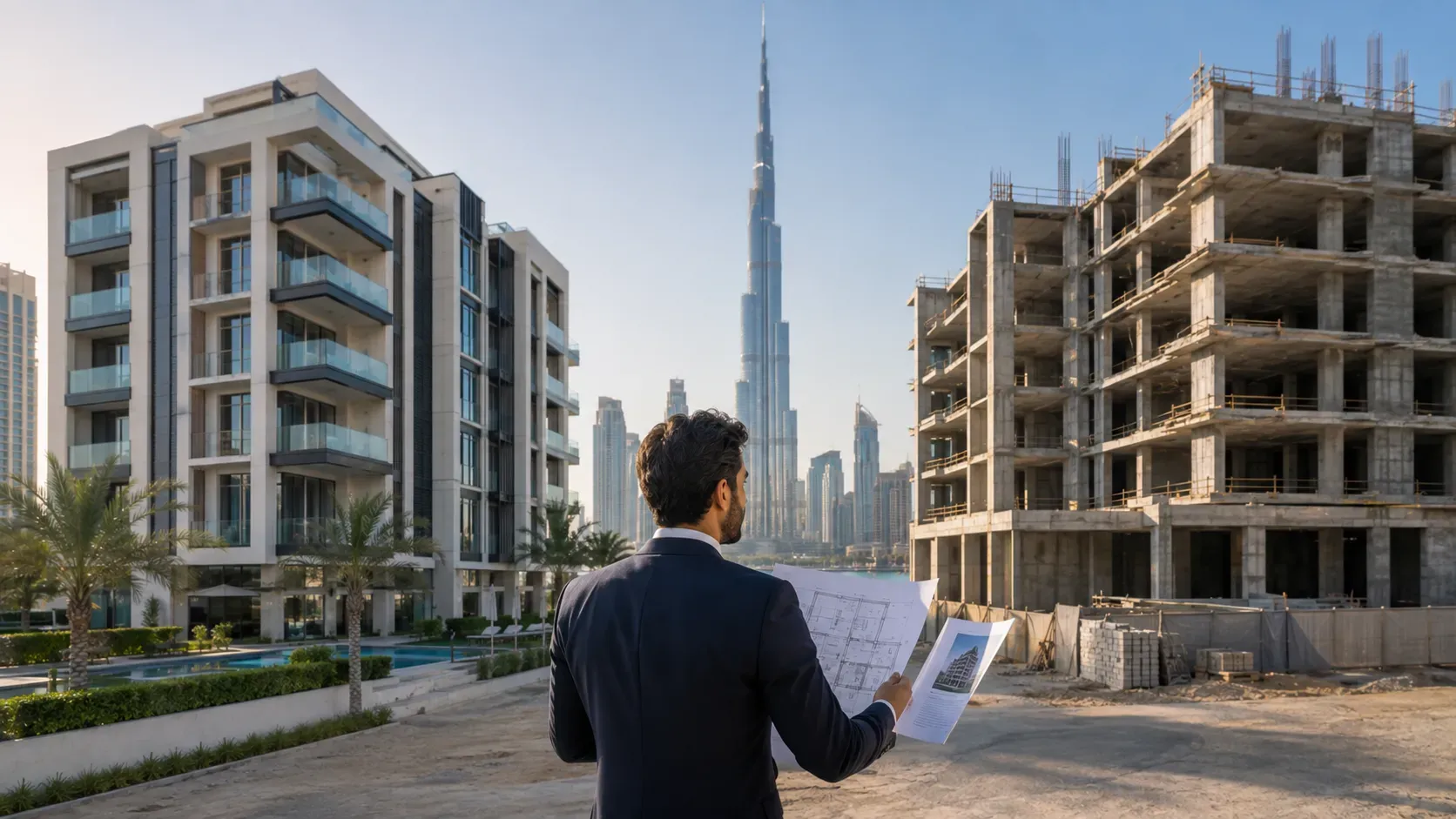
Choosing the right property developer is one of the most important decisions when buying a property in Dubai, particularly when purchasing an off-plan property.
A property may look attractive because of its location, price, payment plan, or expected returns. However, the developer behind the project can have a major influence on construction quality, delivery timelines, after-sales service, community development, and the overall buying experience.
Dubai has a large and diverse property development market, ranging from established developers with extensive delivery histories to newer companies launching individual projects.
This makes developer due diligence essential.
The right approach is not simply to choose the most famous developer. Buyers should investigate the developer, the specific project, its approvals, escrow arrangements, delivery history, financial structure, construction progress, and contractual terms before making a decision.
Quick Answer
To choose the right property developer in Dubai, look beyond branding and marketing.
Check the developer's registration, previous projects, delivery record, construction quality, financial strength, project registration, escrow account, approvals, payment plan, SPA terms, service charges, and customer feedback.
For off-plan property, verify the project independently through official Dubai Land Department resources rather than relying solely on information provided by sales representatives.
A developer with a strong reputation is a positive sign, but the individual project still needs to be evaluated separately.
Key Takeaways
- Check whether the developer is properly registered and licensed.
- Research the developer's completed projects.
- Examine its history of delivering projects on time.
- Verify the specific project's registration and approvals.
- Confirm the existence of the project's escrow account for applicable off-plan purchases.
- Check actual construction progress.
- Compare payment plans rather than focusing only on the initial deposit.
- Read the Sale and Purchase Agreement carefully.
- Investigate service charges and ongoing ownership costs.
- Look for consistent customer feedback across completed projects.
- Do not assume that a large developer makes every project a good investment.
Why Does the Property Developer Matter?
The developer is responsible for turning the proposed project into an actual property.
This can affect almost every stage of ownership.
A developer's performance can influence:
- Construction quality
- Project completion
- Handover timelines
- Community facilities
- Building maintenance
- Customer service
- Defect resolution
- Property management
- Resale appeal
For example, two apartments with similar prices and locations may have very different long-term experiences if one is developed by a company with a strong delivery record and the other is developed by a company with limited experience.
This is particularly important for off-plan buyers, because the buyer is committing money before the finished property exists.
Check the Developer's Track Record
One of the first things to investigate is the developer's previous work.
Do not rely only on the number of projects shown on the company's website.
Look for evidence of actual completed developments.
Ask:
- How many projects has the developer completed?
- How long has the developer been operating?
- Where are its completed properties?
- Were previous projects delivered on time?
- What is the construction quality like?
- Are completed communities occupied?
- What do existing owners say about the developer?
- How does the developer handle defects and complaints?
A developer with a long history of completed projects gives buyers more information to evaluate than a company with no meaningful delivery record.
However, experience alone does not guarantee that a new project will perform well.
The individual development still needs separate due diligence.
Research Previous Projects
Previous projects can provide useful evidence about what you might expect from a new development.
If possible, visit completed properties rather than evaluating them only through brochures or online photographs.
Pay attention to:
Construction Quality
Look at:
- Exterior finishes
- Common areas
- Lobby
- Elevators
- Parking
- Landscaping
- Building maintenance
- Fixtures and fittings
Community Condition
If the development includes multiple buildings, examine how the wider community has been maintained.
A visually attractive launch presentation does not necessarily reflect how a development will look several years after completion.
Resident Experience
Existing residents can provide insights into:
- Maintenance response
- Building management
- Facilities
- Noise
- Parking
- Service quality
- Defect resolution
This type of research can reveal information that may not appear in the developer's marketing materials.
Verify the Developer's Registration
Buyers should verify the developer independently through official Dubai authorities.
The Dubai Land Department provides services covering licensed developers, project registration, project status, and related real estate information.
This is particularly important when considering an unfamiliar developer.
Do not assume that information presented by a salesperson is sufficient.
Before committing money, verify:
- Developer registration
- Project registration
- Relevant licences
- Project status
- Required approvals
Using official records provides an additional layer of due diligence.
Check the Specific Project, Not Just the Developer
A common mistake is to assume that a reputable developer automatically means every project is suitable.
That is not necessarily the case.
A developer may have several projects with different:
- Locations
- Price points
- Property types
- Payment plans
- Target markets
- Construction schedules
- Expected rental demand
For this reason, evaluate the project independently.
Look at:
Developer → Project → Location → Unit → Price → Payment plan → Expected costs → Exit potential
This approach provides a much more complete picture.
Verify Project Registration and Approvals
For an off-plan purchase, buyers should confirm that the project has the required registration and approvals.
Dubai Land Department's investor guidance recommends checking important details including whether the project and developer are registered, whether an escrow account exists, the project's completion percentage and expected completion date, and whether required permits and approvals are in place.
This step should happen before signing or making a significant financial commitment.
A sales brochure may explain what the developer intends to build, but official project records help establish the regulatory status of the development.
Understand the Escrow Account
An escrow account is particularly important when buying an off-plan property in Dubai.
Dubai Land Department explains that payments made by buyers for off-plan units are deposited into the project's escrow account, which is designed to regulate construction-related fund usage and provide protection for investors.
Buyers should therefore verify that the relevant project has the required escrow arrangements.
Do not simply accept a statement such as "the project has escrow."
Verify the information through the appropriate official channels.
Understanding where your payments are going is a fundamental part of off-plan due diligence.
Check Construction Progress
If the project is already under construction, examine its actual progress.
Dubai Land Department provides mechanisms for checking project status and information such as completion percentage.
This can help buyers compare the developer's stated timeline with the project's actual progress.
For example, if a project is marketed as approaching completion but official information indicates that construction remains at an earlier stage, the difference deserves further investigation.
Construction progress should therefore be treated as an important part of the buying decision.
Examine the Developer's Delivery History
A developer's previous delivery record can be more informative than marketing claims about future projects.
Look for patterns.
For example:
Strong history:Several completed projects + reasonable delivery record + good owner feedback.
Potential concern:Repeated delays + unresolved defects + poor communication + complaints across multiple completed projects.
One delayed project does not necessarily mean a developer is unreliable. Construction can be affected by financing, approvals, supply chains, market conditions, and other factors.
The important point is to identify whether delays or quality problems appear to be isolated incidents or recurring patterns.
Check the Developer's Financial Strength
Financial stability is another consideration, particularly for large off-plan projects that may take several years to complete.
Buyers should consider whether the developer appears to have the resources and operational capacity to deliver the project.
Useful indicators may include:
- Length of operating history
- Number of completed projects
- Current project pipeline
- Construction progress
- Corporate track record
- Reputation among existing buyers
For major developers, publicly available corporate information may provide additional context.
For smaller or newer developers, buyers may need to conduct more extensive due diligence.
A newer developer is not automatically a bad choice, but limited history means there is less evidence available to assess future performance.
Evaluate the Location Alongside the Developer
Even an excellent developer cannot compensate for a fundamentally unsuitable location.
A property developer should therefore never be evaluated separately from the project's location.
Research:
- Accessibility
- Public transport
- Roads
- Schools
- Hospitals
- Shopping
- Employment centres
- Tourism attractions
- Future infrastructure
- Nearby developments
Also consider who is expected to live in or use the project.
A development aimed at families may need different location characteristics from a project aimed at professionals or short-term tenants.
Don't Choose a Developer Based Only on Reputation
A well-known developer can provide greater familiarity and a longer track record.
But reputation should be only one part of the decision.
Consider a simple example.
Developer A has an excellent reputation but is launching a project in a location with substantial competing supply and a high purchase price.
Developer B is less established but has a properly registered project in a strong location with reasonable pricing and a transparent payment structure.
The decision should not automatically be Developer A.
The specific investment fundamentals matter.
What Should You Check Before Paying?
Before committing to an off-plan property, buyers should ideally verify:
Check | Why It Matters |
|---|---|
Developer registration | Confirms regulatory status |
Project registration | Confirms the project is properly registered |
Escrow account | Important for off-plan buyer protection |
Approvals | Confirms required permissions |
Construction progress | Helps assess delivery status |
Previous projects | Shows developer experience |
Delivery history | Reveals potential delay patterns |
Payment plan | Determines future financial obligations |
SPA | Defines contractual rights and obligations |
Service charges | Affects long-term ownership costs |
Location | Influences demand and resale potential |
No single check is enough.
The objective is to build a complete picture before making a financial commitment.
Compare Construction Quality
A developer's reputation is important, but the actual construction quality of its completed projects can tell you much more.
If possible, visit previous developments and inspect areas that marketing materials rarely highlight.
Look at:
- Building entrances and lobbies
- Elevators
- Parking areas
- Corridors
- External finishes
- Landscaping
- Swimming pools and gyms
- Common-area maintenance
- Apartment finishes
- Sound insulation where possible
Also consider how the property looks several years after completion.
A newly launched project can look impressive because everything is new. A completed development gives you a better indication of how the developer's materials, finishes, facilities, and maintenance standards perform over time.
Review the Payment Plan Carefully
Payment plans are often one of the biggest selling points of Dubai off-plan property.
A developer may advertise:
- Low initial deposit
- Installments during construction
- Post-handover payments
- Extended payment periods
- Monthly installments
However, a convenient payment plan does not necessarily mean the property represents good value.
Calculate the total amount you will pay, including all relevant costs.
For example, a buyer might be attracted to a small initial payment but later discover that several large installments are due during construction.
Before signing, map the entire payment schedule against your expected cash flow.
Ask:
- How much is required upfront?
- When are future installments due?
- What percentage is payable at handover?
- Are there post-handover payments?
- What happens if construction is delayed?
- Are there additional administrative or registration costs?
The payment plan should fit your finances without requiring excessive borrowing.
Understand the Sale and Purchase Agreement
The Sale and Purchase Agreement, commonly referred to as the SPA, is one of the most important documents in a property purchase.
Do not treat it as routine paperwork.
The SPA can contain important details covering:
- Purchase price
- Payment schedule
- Handover
- Completion
- Property specifications
- Developer obligations
- Buyer obligations
- Default provisions
- Cancellation conditions
- Delays
- Registration
- Additional charges
Buyers should read the agreement carefully and obtain appropriate professional advice if they do not understand a particular clause.
A sales representative's verbal explanation should not replace the actual contractual terms.
Check Service Charges
Service charges can have a significant effect on the long-term cost of owning a property.
They may cover expenses associated with:
- Common areas
- Building management
- Security
- Cleaning
- Landscaping
- Facilities
- Maintenance
A property with an attractive purchase price may become less attractive if its ongoing ownership costs are substantially higher than comparable properties.
Before buying, ask about expected service charges and compare them with similar developments.
For an investment property, include these costs when calculating rental yield.
Research Customer Reviews
Online reviews can provide useful information, but they should be interpreted carefully.
A few negative reviews do not automatically mean a developer is unreliable.
Instead, look for repeated patterns.
Pay attention to complaints involving:
- Delayed handovers
- Poor construction quality
- Unresolved defects
- Communication problems
- Maintenance
- Refund disputes
- Unexpected charges
- Post-handover support
It is also useful to look at feedback from owners of completed projects rather than relying only on reviews of newly launched developments.
The goal is not to find a developer with zero complaints. Large developers can have thousands of customers.
The goal is to determine whether there are recurring problems that could affect your purchase.
Evaluate Post-Handover Support
The developer's responsibility does not necessarily end when you receive the keys.
The post-handover experience can affect your ownership costs and satisfaction.
Find out how the developer handles:
- Defects
- Maintenance requests
- Snagging
- Warranty-related issues
- Building management
- Customer complaints
A developer may deliver a property on time but still provide a poor experience afterward.
If you are buying the property as an investment, post-handover service can also affect how quickly you can prepare the unit for tenants.
Check the Expected Completion Date
Off-plan buyers should pay close attention to the expected completion and handover date.
A delay can affect:
- Rental income plans
- Mortgage arrangements
- Investment timelines
- Resale plans
- Personal housing arrangements
Dubai Land Department provides project information that can help buyers assess project status and completion progress.
Do not rely exclusively on an estimated date mentioned in a sales presentation.
Instead, compare the contractual completion provisions with the project's actual construction progress.
Look for Red Flags
Certain warning signs deserve additional investigation.
Pressure to Pay Immediately
Be cautious if a salesperson creates unnecessary urgency or discourages you from conducting independent checks.
Unclear Project Information
A buyer should be able to obtain clear information about the project, developer, payment structure, and relevant approvals.
Unrealistic Returns
Be careful with claims that a property will definitely generate a particular rental yield or guaranteed appreciation.
Property returns depend on market conditions and the individual asset.
Unclear Fees
Ask for a complete breakdown of relevant costs before committing.
Limited Developer History
A new developer is not automatically problematic, but limited experience means you have less historical evidence to evaluate.
Major Differences Between Marketing and Documentation
If the brochure, sales presentation, and contractual documents appear inconsistent, ask for clarification before signing.
Don't Ignore the Developer's Project Pipeline
A developer's current and upcoming projects can also affect your investment.
If a developer is launching many similar properties in the same area, future supply could create competition between its own developments.
This can potentially affect:
- Rental rates
- Vacancy
- Resale demand
- Capital appreciation
Therefore, when evaluating a developer, look beyond the specific building.
Understand what else is being developed nearby and what the wider supply pipeline looks like.
Compare Developers Using the Same Criteria
It can be difficult to compare developers when each sales team presents different information.
A simple comparison framework can make the process easier.
Factor | Developer A | Developer B | Developer C |
|---|---|---|---|
Registration | Verify | Verify | Verify |
Completed projects | Review | Review | Review |
Delivery history | Compare | Compare | Compare |
Construction quality | Inspect | Inspect | Inspect |
Project location | Assess | Assess | Assess |
Escrow arrangement | Verify | Verify | Verify |
Payment plan | Compare | Compare | Compare |
Service charges | Compare | Compare | Compare |
Customer feedback | Research | Research | Research |
Post-handover support | Research | Research | Research |
The objective is not to find the developer with the longest list of projects.
It is to determine which developer-project combination provides the strongest overall case.
Developer Reputation vs Property Fundamentals
A reputable developer can reduce certain uncertainties, but it does not automatically make a property a good investment.
Consider the full equation:
Developer + Location + Property + Price + Rental Demand + Costs + Payment Terms
All of these factors matter.
A premium developer may sell a property at a premium price. If the price is significantly higher than comparable properties without a corresponding advantage in rental demand or resale value, the investment may still be unattractive.
Conversely, a lesser-known developer may have a project worth investigating if its registration, construction, location, pricing, and delivery record are satisfactory.
How to Choose Between Two Developers
If two developers appear equally credible, compare the actual projects.
Start with location.
Then compare:
- Purchase price
- Price per square foot
- Property size
- Expected rental income
- Service charges
- Payment schedule
- Construction stage
- Expected completion
- Comparable completed properties
- Resale potential
This approach prevents the decision from becoming purely brand-driven.
A Practical Developer Due-Diligence Checklist
Before making a purchase, work through the following checklist.
Developer
- Is the developer registered?
- How long has it operated?
- How many projects has it completed?
- What is its delivery history?
- What do existing owners say?
Project
- Is the project registered?
- Are required approvals in place?
- Is an escrow account established where applicable?
- What is the current construction percentage?
- What is the expected completion date?
Property
- Is the unit appropriately priced?
- What rental demand exists?
- What are comparable properties selling for?
- What are expected service charges?
- How easy might it be to resell?
Contract
- Have you reviewed the SPA?
- Are payment dates clear?
- Are handover conditions clear?
- Are cancellation and default clauses understood?
- Are additional charges clearly stated?
Investment
- What is the realistic net rental yield?
- How much capital will remain after purchase?
- Can you manage unexpected costs?
- What happens if rent falls?
- What happens if completion is delayed?
Should You Always Choose a Famous Developer?
No.
A well-known developer can offer a valuable track record, but the biggest name is not automatically the best choice for every buyer.
A developer should be evaluated according to:
Evidence, not reputation alone.
Look at its completed projects, construction quality, delivery performance, regulatory status, customer experience, and financial structure.
Then evaluate the specific project independently.
Final Verdict
Choosing the right property developer in Dubai requires more than comparing brand names or looking at attractive launch brochures.
The strongest due-diligence process starts with developer registration and project verification, followed by an assessment of previous projects, delivery history, construction quality, escrow arrangements, approvals, payment terms, contractual conditions, service charges, and customer experience.
For off-plan purchases, official verification is especially important. Dubai Land Department provides tools and guidance covering licensed developers, project registration, project status, escrow arrangements, and other relevant information for buyers.
Most importantly, do not evaluate the developer in isolation.
A reputable developer can still have projects with different locations, prices, payment structures, and investment prospects.
The best decision comes from evaluating the developer, project, location, price, costs, rental demand, contract, and your own financial position together.
If you are researching Dubai properties and comparing projects before making a purchase, Buy Home Dubai can be a starting point for exploring properties based on location, budget, and investment objectives.
Frequently Asked Questions
How do I check whether a property developer is registered in Dubai?
Use Dubai Land Department's official services to verify licensed developers and relevant project information rather than relying solely on information provided by a sales representative.
Is a famous Dubai developer always the best choice?
Not necessarily. Reputation and experience are useful indicators, but buyers should also evaluate the specific project's location, pricing, payment plan, construction progress, service charges, and expected demand.
What should I check before buying an off-plan property?
Check the developer and project registration, escrow arrangements, approvals, construction progress, expected completion date, payment schedule, SPA, service charges, and developer's previous delivery record.
Why is an escrow account important?
For applicable off-plan projects, buyer payments are deposited into a project escrow account under Dubai's regulatory framework. This provides an important layer of protection and helps regulate the use of project funds.
How can I check the progress of a Dubai property project?
Dubai Land Department provides project-related information that can help buyers check status and construction progress.
Should I visit a developer's completed projects?
Yes. Visiting completed projects can help you assess construction quality, facilities, maintenance, community condition, and the overall owner experience.
What are the biggest red flags when choosing a developer?
Be cautious about unclear project information, pressure to make immediate payments, unrealistic return promises, unexplained fees, limited delivery history, and discrepancies between marketing claims and contractual documents.
Does the developer affect property resale value?
It can. A developer's reputation, construction quality, community management, and buyer confidence may influence demand for completed properties. However, location, pricing, property condition, and market conditions are also important.
Should I choose a developer based on the payment plan?
No. A payment plan should be considered alongside the total purchase price, expected rental income, service charges, financing requirements, and the project's fundamentals.
Can a new property developer be a good choice?
Yes, but a newer developer provides less historical evidence to assess. Buyers should compensate by conducting more thorough checks on registration, project approvals, financial capacity, project partners, construction progress, and contractual protections.

Dubai Real Estate
Ready to find your
dream home in Dubai?
Browse thousands of properties across Dubai's most sought-after neighbourhoods. Our experts are ready to guide you.