Real EstateJune 29, 2026
Why Infrastructure Projects Increase Property Values in Dubai
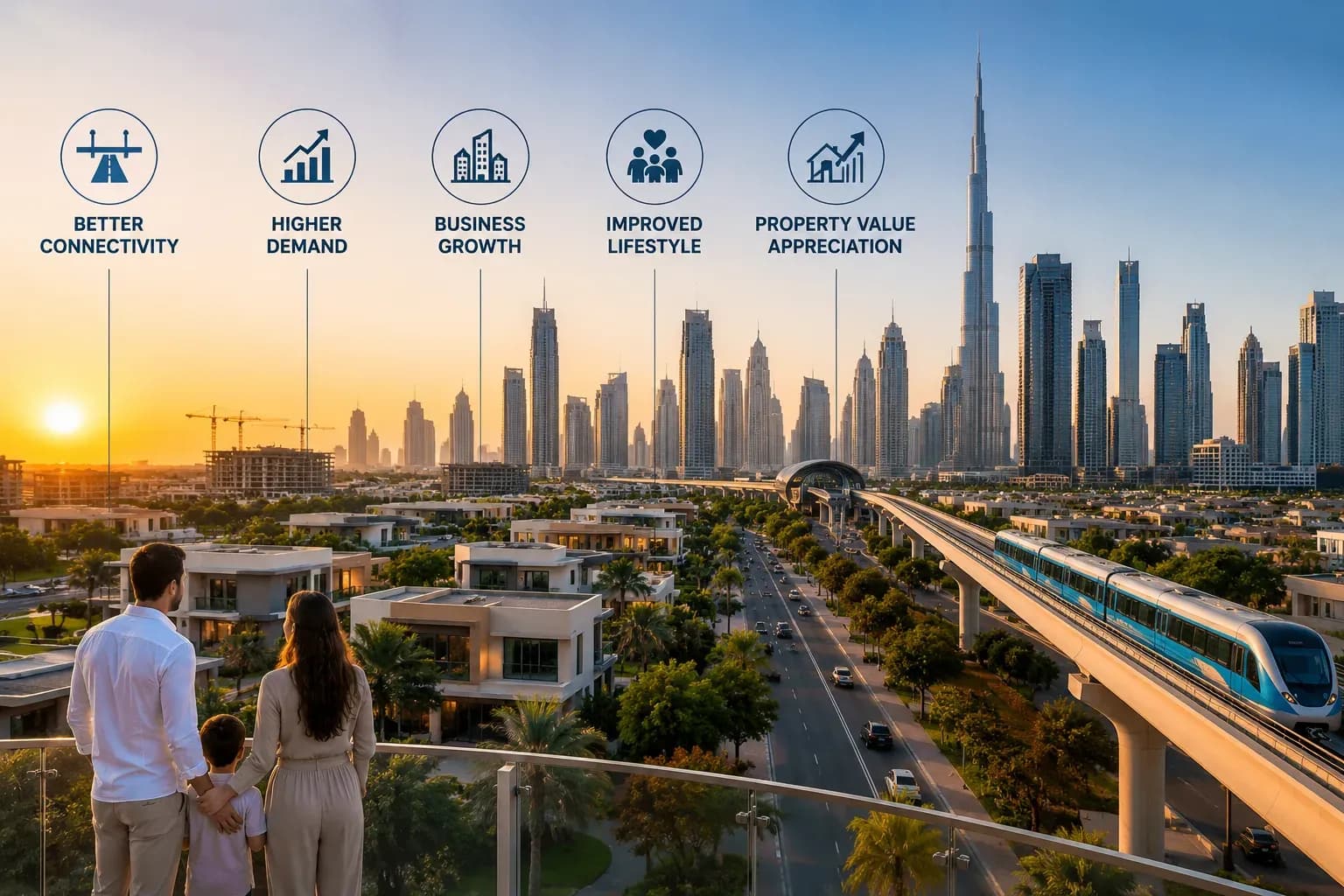
Dubai's skyline has changed dramatically over the past two decades, but it's not just iconic buildings that have shaped the city's real estate market. Behind every thriving community is a network of roads, metro lines, schools, parks, healthcare facilities, and commercial developments that make neighbourhoods more attractive places to live and work.
Infrastructure projects play a crucial role in determining property values. They improve connectivity, support economic growth, attract new residents, and increase demand for homes. While factors like location, property type, and market conditions always matter, infrastructure investment is often one of the strongest long-term drivers of real estate appreciation.
Whether you're buying your first home or investing in Dubai property, understanding how infrastructure influences property values can help you make more informed decisions.
Quick Answer
Infrastructure projects increase property values in Dubai by improving accessibility, attracting businesses and residents, enhancing community amenities, and supporting long-term economic growth. Areas that benefit from new transport links, schools, healthcare facilities, and commercial developments often experience stronger housing demand and greater potential for property appreciation.
Key Takeaways
- Infrastructure improvements make communities more desirable.
- Better transport links can increase buyer and tenant demand.
- New schools, parks, and healthcare facilities improve quality of life.
- Large government development plans often support long-term property appreciation.
- Infrastructure is one factor among many that influence real estate values.
- Investors should consider future infrastructure projects when evaluating locations.
Why Infrastructure Matters in Real Estate
Location has always been one of the biggest influences on property values, but what makes a location desirable often changes over time.
Infrastructure helps shape that desirability by making everyday life more convenient. Easy access to transportation, employment centres, schools, shopping, and healthcare encourages more people to live in an area, increasing demand for housing.
As demand grows, property values often become more resilient over the long term.
What Counts as Infrastructure?
Infrastructure includes far more than roads.
Major projects that influence Dubai's property market include:
- Metro lines and public transport
- Highways and road improvements
- Airports
- Schools and universities
- Hospitals and healthcare centres
- Parks and recreational spaces
- Shopping malls
- Business districts
- Utilities and digital infrastructure
- Mixed-use master developments
Together, these investments create communities where people want to live, work, and invest.
Improved Connectivity Increases Demand
One of the quickest ways infrastructure can affect property values is by improving connectivity.
When commuting becomes easier, more buyers consider moving into an area.
For example, improved access to:
- Metro stations
- Major highways
- Business districts
- Airports
can reduce travel times and make daily life more convenient.
Communities with strong transport connections often attract both homeowners and tenants, supporting sustained demand.
Better Amenities Improve Lifestyle
Modern buyers are looking for more than just a home.
They also value:
- Schools
- Healthcare facilities
- Parks
- Fitness centres
- Retail destinations
- Restaurants
- Entertainment options
As these amenities develop, communities become more attractive to families, professionals, and retirees alike.
Higher desirability can contribute to stronger long-term property values.
Infrastructure Attracts Businesses
Infrastructure doesn't only benefit residents—it also attracts employers.
New business districts, office developments, and commercial hubs create employment opportunities, bringing more professionals into nearby residential communities.
This increased demand can benefit:
Growth Driver | Property Market Impact |
|---|---|
New offices | Higher apartment demand |
Business parks | Increased rental demand |
Commercial expansion | More buyer interest |
Employment growth | Stronger housing demand |
Communities close to major employment centres often remain popular because they reduce commuting times.
Population Growth and Infrastructure Go Hand in Hand
Dubai's population continues to grow, creating demand for additional housing and public services.
To support this growth, authorities invest in:
- Transport networks
- Utilities
- Community facilities
- Public spaces
- Healthcare
- Education
These investments make expanding neighbourhoods more liveable and help maintain the city's long-term appeal.
Infrastructure and population growth often reinforce one another, supporting demand for residential property.
Government Master Plans Shape Future Growth
Long-term government initiatives play an important role in infrastructure development.
Plans such as the Dubai 2040 Urban Master Plan and the Dubai Economic Agenda D33 focus on:
- Sustainable urban expansion
- Improved mobility
- More green spaces
- Better public services
- Economic diversification
- Enhanced quality of life
These initiatives provide confidence for buyers and investors looking at long-term opportunities.
Examples of Infrastructure That Can Influence Property Values
Different types of infrastructure affect communities in different ways.
Infrastructure Project | Potential Impact |
|---|---|
Metro expansion | Better accessibility and higher demand |
New schools | Greater appeal for families |
Hospitals | Improved community convenience |
Parks and green spaces | Enhanced lifestyle value |
Shopping destinations | Increased neighbourhood activity |
Road upgrades | Reduced travel times |
Airport expansion | Improved regional connectivity |
While no single project guarantees price growth, multiple improvements often strengthen an area's long-term attractiveness.
Infrastructure Supports Rental Demand
Infrastructure benefits landlords as well as homeowners.
Tenants often prefer communities that offer:
- Easy commuting
- Schools nearby
- Shopping options
- Recreational facilities
- Reliable public transport
Properties in well-connected neighbourhoods may experience:
- Lower vacancy rates
- Broader tenant appeal
- More consistent rental demand
For investors, this can contribute to healthier long-term returns.
Which Communities Often Benefit?
Many of Dubai's established and emerging communities have grown alongside significant infrastructure investment.
Examples include:
- Dubai Hills Estate
- Dubai Creek Harbour
- Business Bay
- Dubai Marina
- Jumeirah Village Circle (JVC)
- Dubai South
Each community has developed around different infrastructure advantages, from transport access to lifestyle amenities and commercial growth.
Infrastructure Doesn't Guarantee Higher Prices
Although infrastructure is an important driver of property values, it isn't the only factor.
Property prices also depend on:
- Housing supply
- Market demand
- Interest rates
- Economic conditions
- Developer reputation
- Community management
- Overall buyer confidence
Successful investors evaluate infrastructure as part of a broader market analysis rather than relying on one factor alone.
What Buyers Should Research
Before buying property, consider researching:
Question | Why It Matters |
|---|---|
Are new infrastructure projects planned nearby? | Indicates future growth potential |
How well connected is the community? | Affects convenience and demand |
Are schools and healthcare facilities available? | Important for families |
Are commercial developments planned? | May increase employment and housing demand |
Is public transport improving? | Supports accessibility and resale appeal |
Looking at both current and planned infrastructure can provide a clearer picture of a community's future potential.
Common Myths
"Only metro stations affect property prices."
Metro access is important, but schools, hospitals, parks, roads, and commercial developments can also influence demand.
"Infrastructure causes immediate price increases."
Property appreciation often takes time as projects are completed and communities mature.
"Every infrastructure project has the same impact."
Large, well-planned developments generally have a greater influence than smaller local improvements.
Final Thoughts
Infrastructure is one of the foundations of Dubai's long-term real estate success. From transport networks and business districts to schools and green spaces, these investments improve quality of life, attract new residents, and support growing demand for housing.
While infrastructure alone doesn't determine property prices, it works alongside population growth, economic development, and market demand to shape property values over time. Buyers and investors who consider both existing amenities and future development plans are often better positioned to make informed decisions.
If you're planning to buy, invest in, sell, or list property in Dubai, Buy Home Dubai can help you evaluate communities, understand market trends, and identify opportunities with strong long-term potential.
Frequently Asked Questions
Why do infrastructure projects increase property values?
Infrastructure improves accessibility, convenience, and quality of life, making communities more attractive to buyers and tenants, which can increase housing demand.
Does a new metro station always increase property prices?
Not always. While improved public transport can support demand, property values also depend on factors such as supply, location, economic conditions, and overall market sentiment.
Which types of infrastructure have the biggest impact?
Transport networks, schools, hospitals, commercial districts, parks, and large mixed-use developments often have the greatest influence on long-term property demand.
Should investors consider future infrastructure projects?
Yes. Planned infrastructure improvements can indicate areas with long-term growth potential, although they should be evaluated alongside other investment factors.
Can infrastructure affect rental demand?
Absolutely. Well-connected communities with strong amenities are often more attractive to tenants, helping support occupancy rates and rental income.
Why is infrastructure important when buying a home?
Beyond investment potential, infrastructure influences daily convenience, commuting times, access to services, and overall quality of life, making it an important consideration for any property buyer.

Dubai Real Estate
Ready to find your
dream home in Dubai?
Browse thousands of properties across Dubai's most sought-after neighbourhoods. Our experts are ready to guide you.