Real EstateSeptember 4, 2026
Family-Friendly vs Investor-Friendly Communities in Dubai
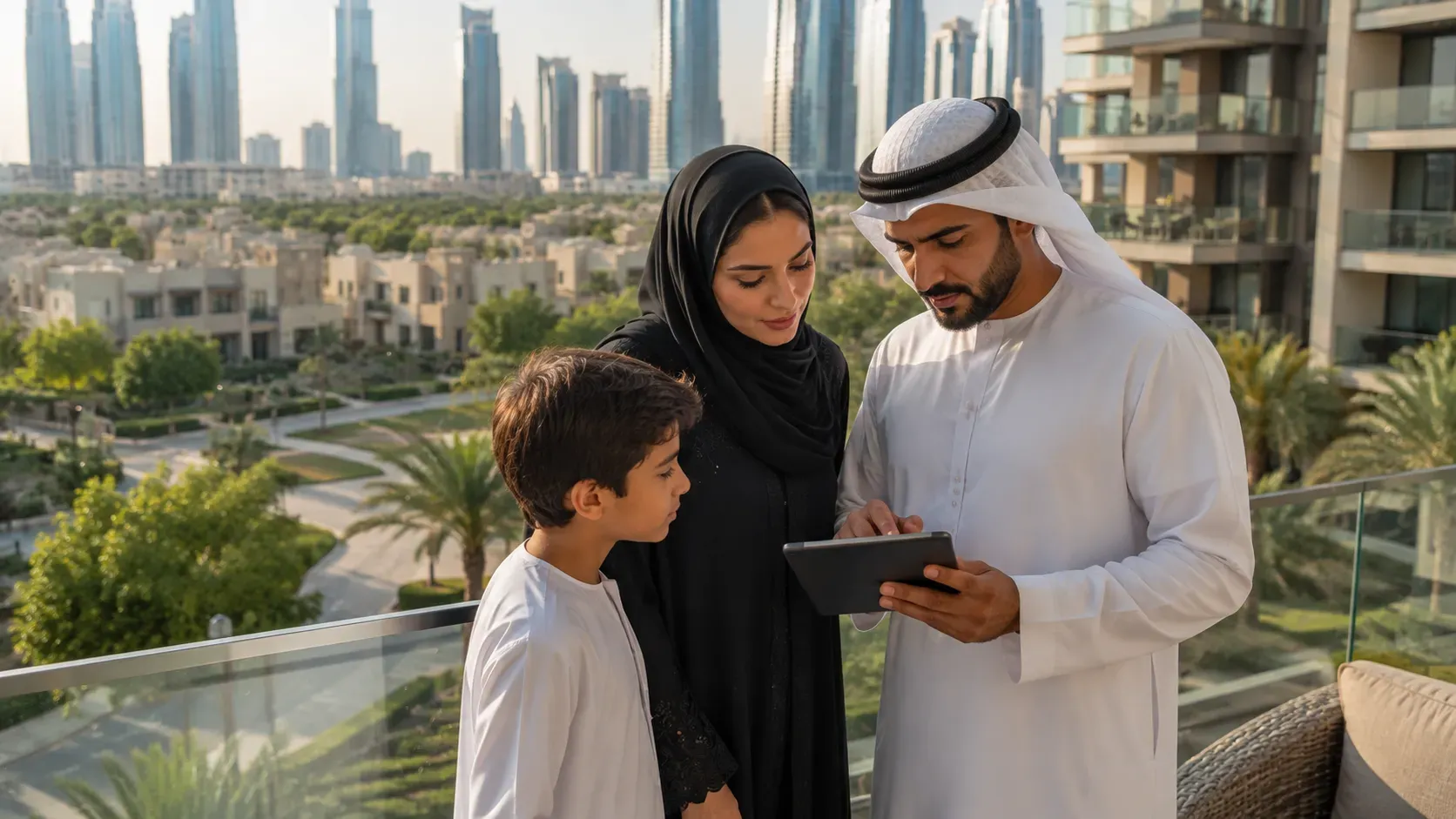
Choosing a Dubai community depends heavily on what you want from the property. A family buying a home for long-term living will usually look at schools, parks, space, healthcare and everyday convenience. An investor, meanwhile, is more likely to focus on purchase price, rental demand, rental yield, vacancy risk and resale potential.
Some communities perform well for both groups. Others are more strongly suited to one purpose.
Dubai's residential market in 2026 continues to attract both end users and investors, but performance varies significantly between communities and property types. Bayut's H1 2026 market report shows different communities leading the affordable, mid-tier, luxury and ultra-luxury segments, while rental returns also vary considerably between areas.
Understanding the difference between a family-friendly community and an investor-friendly community can therefore help you choose a property that matches your actual objectives.
Quick Answer
Family-friendly communities generally prioritise schools, parks, larger homes, healthcare, amenities, accessibility and quality of life.
Investor-friendly communities generally prioritise rental demand, purchase price, rental yield, tenant liquidity, operating costs and resale potential.
However, the two categories can overlap. Communities with good schools, transport, amenities and housing options can attract families as tenants while also offering investors strong rental demand.
The right choice depends on whether your primary objective is living comfortably, generating income or combining both.
What Makes a Dubai Community Family-Friendly?
A family-friendly community should make everyday life easier rather than simply look attractive on a property listing.
Families typically place greater importance on:
- Schools and nurseries
- Parks and playgrounds
- Healthcare facilities
- Supermarkets
- Larger homes
- Safe and comfortable surroundings
- Community facilities
- Access to major roads
- Public transport
- Restaurants and everyday services
Property Finder's 2026 family-community guidance highlights factors such as schools, parks, supermarkets, hospitals, transport preferences, workplace location and budget when choosing where to live with a family.
For families, the quality of the surrounding community can sometimes be just as important as the property itself.
A slightly smaller home in a well-connected community with nearby schools and parks may be more practical than a larger property in an area that requires long daily drives.
What Makes a Dubai Community Investor-Friendly?
Investors usually evaluate a community through financial performance rather than lifestyle alone.
Important factors include:
- Purchase price
- Rental income
- Rental yield
- Tenant demand
- Vacancy risk
- Service charges
- Maintenance costs
- Capital appreciation potential
- Resale demand
- Future property supply
- Transport connectivity
A community with relatively affordable properties and strong rental demand can be attractive to an investor even if it does not offer the same prestige or lifestyle appeal as a luxury waterfront location.
Bayut's H1 2026 data illustrates this difference. Discovery Gardens recorded a projected apartment ROI of 9.06%, while Dubai Silicon Oasis recorded 8.23%. By comparison, Dubai Marina's luxury apartment segment recorded 5.88%. These figures are projected market ROIs and are not guaranteed future returns.
This demonstrates why investors should evaluate income relative to purchase price, rather than simply choosing the most expensive or prestigious location.
Family-Friendly vs Investor-Friendly Communities: Key Differences
The priorities of the two buyer types can be compared directly.
Factor | Family-Friendly Community | Investor-Friendly Community |
|---|---|---|
Main priority | Quality of life | Financial return |
Property type | Villas, townhouses and larger apartments | Apartments often attractive |
Schools | Very important | Useful for tenant demand |
Parks | High priority | Secondary |
Rental yield | Less important | Major consideration |
Purchase price | Affordability and comfort | Entry price and return |
Transport | Daily convenience | Tenant and resale demand |
Amenities | Lifestyle and convenience | Rental attractiveness |
Vacancy | Less relevant to owner-occupier | Major consideration |
Resale | Long-term usability | Liquidity and demand |
Future supply | Community development | Competition risk |
Main question | Can my family live comfortably here? | Can my capital perform well here? |
The important point is that neither approach is automatically better.
They simply measure success differently.
Best Dubai Communities for Families
There is no universal ranking of the best family communities because families have different budgets and requirements.
Dubai Hills Estate
Dubai Hills Estate can appeal to families seeking a master-planned environment, green spaces, schools, amenities and larger residential options.
It also demonstrates how family-oriented characteristics can overlap with investment demand. Bayut's H1 2026 report recorded Dubai Hills Estate as a leading luxury apartment and villa market, showing demand from both investors and end users.
Arabian Ranches
Arabian Ranches is more closely associated with villa living and established suburban community life.
It can suit families prioritising:
- Larger homes
- Privacy
- Green surroundings
- Community facilities
- Family-oriented living
For an investor, however, the higher acquisition cost and lower projected yield compared with some affordable apartment markets may change the investment calculation. Bayut recorded a 3.87% projected ROI for Arabian Ranches luxury villas in H1 2026.
Al Furjan
Al Furjan offers apartments, villas and townhouses and has become relevant to both families and investors.
Its connectivity, range of property types and community amenities make it particularly useful for buyers who want to balance lifestyle and investment considerations.
Bayut's H1 2026 report also recorded Al Furjan as a leading mid-tier villa market, while its apartment segment recorded a projected 7.69% ROI.
Jumeirah Village Circle
JVC is another example of a community that can appeal to both groups.
Families can benefit from parks, supermarkets, restaurants and a wide range of residential options, while investors can benefit from relatively accessible apartment prices and rental demand.
Bayut recorded a projected 7.15% ROI for JVC's mid-tier apartments in H1 2026.
Best Dubai Communities for Property Investors
Investors should avoid selecting an area purely because it has a high headline ROI.
Instead, consider why the yield is high and whether the underlying demand is sustainable.
Discovery Gardens
Discovery Gardens stood out in Bayut's H1 2026 data with a projected apartment ROI of 9.06%.
Its relatively accessible pricing and established rental market can make it relevant to investors focused primarily on rental income.
Dubai Silicon Oasis
Dubai Silicon Oasis recorded a projected 8.23% apartment ROI in Bayut's H1 2026 analysis.
Its comparatively affordable entry prices and established residential infrastructure make it an example of an investor-oriented community where rental yield can be a major attraction.
Dubai Sports City
Dubai Sports City also remained an affordable apartment market with a projected 8.12% ROI in Bayut's H1 2026 report.
It can appeal to investors looking for relatively accessible property prices and rental returns.
JVC
JVC demonstrates how a community can serve both families and investors.
Its broad property selection and amenities can support end-user demand, while its apartment pricing and rental market can provide investment opportunities.
Can a Family-Friendly Community Also Be a Good Investment?
Absolutely.
In fact, some of the strongest investment opportunities can come from communities that attract families.
Why?
Families often look for:
- Good schools
- Parks
- Larger homes
- Supermarkets
- Healthcare
- Transport connections
- Safe and established environments
These same characteristics can create a strong tenant pool.
A landlord therefore benefits from a community that people genuinely want to live in.
Al Furjan and JVC are good examples of communities that can appeal to both groups, while Dubai Hills Estate also attracts both end users and investors across different property segments.
The important distinction is not whether a community is strictly "family" or "investor" focused.
It is which demand drivers are strongest in that community.
Should You Choose a Community Based on ROI or Lifestyle?
The answer depends on your purpose.
If You Are Buying to Live
Prioritise:
- Commute
- Schools
- Property size
- Healthcare
- Amenities
- Community environment
- Long-term comfort
You should not choose a community simply because property prices are expected to rise.
You will be living there, potentially for many years.
If You Are Buying as an Investment
Prioritise:
- Purchase price
- Rental demand
- Net rental yield
- Vacancy risk
- Service charges
- Maintenance
- Future supply
- Resale demand
An attractive ROI becomes less useful if high service charges, frequent vacancies or expensive maintenance reduce the actual return.
If You Want Both
This is where community selection becomes more interesting.
You may want a property that works as a comfortable home today but could become a strong rental property later.
In that situation, look for communities with:
- Strong amenities
- Good transport links
- Diverse tenant demand
- Multiple property types
- Established infrastructure
- Reasonable purchase prices
- Good resale liquidity
How to Compare Two Dubai Communities
Instead of relying on popularity, score each community against your own priorities.
Category | Suggested Weight |
|---|---|
Location and commute | 20% |
Property affordability | 15% |
Amenities | 15% |
Schools and healthcare | 10% |
Rental demand | 15% |
Rental yield | 10% |
Resale potential | 10% |
Future development | 5% |
If you are buying a family home, increase the weighting for schools, commute and lifestyle.
If you are investing, give more weight to rental demand, yield, supply and resale liquidity.
This creates a more useful comparison than simply asking which community is "better."
What Should Families Check Before Buying?
Before buying in a family-oriented community, ask:
- Are schools genuinely convenient?
- How long is the commute during peak hours?
- Are supermarkets nearby?
- Is healthcare easily accessible?
- Are there suitable parks?
- Does the property provide enough space?
- Are service charges affordable?
- Is the community well maintained?
- Is there significant construction nearby?
- Will the home still suit the family in five or ten years?
Think beyond the property itself.
Your family will interact with the wider community every day.
What Should Investors Check Before Buying?
Investors should perform a different assessment.
Ask:
- What is the purchase price?
- What rent can the property realistically achieve?
- What is the expected net yield?
- How much competition exists?
- How long do similar properties remain vacant?
- What are the service charges?
- How much maintenance is required?
- Are many new units coming to the market?
- Who are the typical tenants?
- How easy will it be to sell later?
Do not rely entirely on advertised rental yields.
Your calculation should account for realistic operating costs and vacancy.
Likewise, Bayut's published ROI figures are based on its market analysis and should not be interpreted as guaranteed investment returns.
Frequently Asked Questions
What is a family-friendly community in Dubai?
A family-friendly community typically offers convenient access to schools, parks, healthcare, supermarkets, larger homes and everyday amenities.
What is an investor-friendly community in Dubai?
An investor-friendly community generally combines attractive purchase prices with strong rental demand, competitive rental yields, reasonable ownership costs and good resale potential.
Can a family-friendly area be a good investment?
Yes. Strong family demand can support rental occupancy and create a broad tenant pool. Communities such as JVC, Al Furjan and Dubai Hills Estate demonstrate how end-user and investor demand can overlap.
Is JVC better for families or investors?
JVC can work for both. Families can benefit from its amenities and residential options, while investors may be attracted by apartment pricing and rental returns.
Should investors only look for high rental yields?
No. High yield should be considered alongside vacancy risk, service charges, maintenance, property quality, supply and resale potential.
What should families prioritise when choosing a Dubai community?
Families should generally prioritise commute, schools, healthcare, property size, parks, amenities and the overall community environment.
Which is more important, location or rental yield?
For an owner-occupier, location and lifestyle may be more important. For an investor, rental yield is important, but location still affects tenant demand and resale potential.
Can I buy a property for my family and rent it out later?
Yes. If you expect to do this, choose a community that works for your family's current needs while also having strong rental demand and resale prospects.
Key Takeaways
Family-friendly and investor-friendly communities serve different priorities, but they can overlap.
For families:
- Prioritise schools and healthcare.
- Consider commute times.
- Look for suitable property sizes.
- Evaluate parks and amenities.
- Visit the community before buying.
- Think about long-term lifestyle needs.
For investors:
- Compare purchase prices.
- Calculate realistic rental income.
- Evaluate net rather than headline yield.
- Check tenant demand.
- Research competing supply.
- Consider service charges and maintenance.
- Assess future resale demand.
The most attractive communities often combine several of these characteristics.
Final Thoughts
Choosing between a family-friendly and investor-friendly community in Dubai starts with understanding what you want the property to achieve.
A family home should make everyday life convenient and comfortable. An investment property should provide a sensible relationship between purchase price, rental income, costs, risk and future demand.
The two objectives can also overlap.
Communities such as JVC, Al Furjan and Dubai Hills Estate show how lifestyle appeal and investment demand can exist within the same market, although the financial characteristics vary by property type and segment. Current H1 2026 data also shows that affordable apartment communities can offer significantly higher projected rental yields than some premium villa markets.
There is therefore no single "best" community in Dubai.
The better question is:
Which community best matches what you need from the property?
If you are buying for your family, evaluate the community through the lens of daily life. If you are investing, evaluate it through the lens of income, costs, risk and future demand. If you want both, look for a location where strong residential fundamentals support both lifestyle and investment demand.
Taking this approach can help you avoid choosing a property simply because an area is popular and instead select a community that makes sense for your specific goals.
For more practical guides on buying, selling and investing in Dubai property, explore Buy Home Dubai.

Dubai Real Estate
Ready to find your
dream home in Dubai?
Browse thousands of properties across Dubai's most sought-after neighbourhoods. Our experts are ready to guide you.