Real EstateAugust 25, 2026
Can You Cancel an Off-Plan Property Purchase in Dubai?
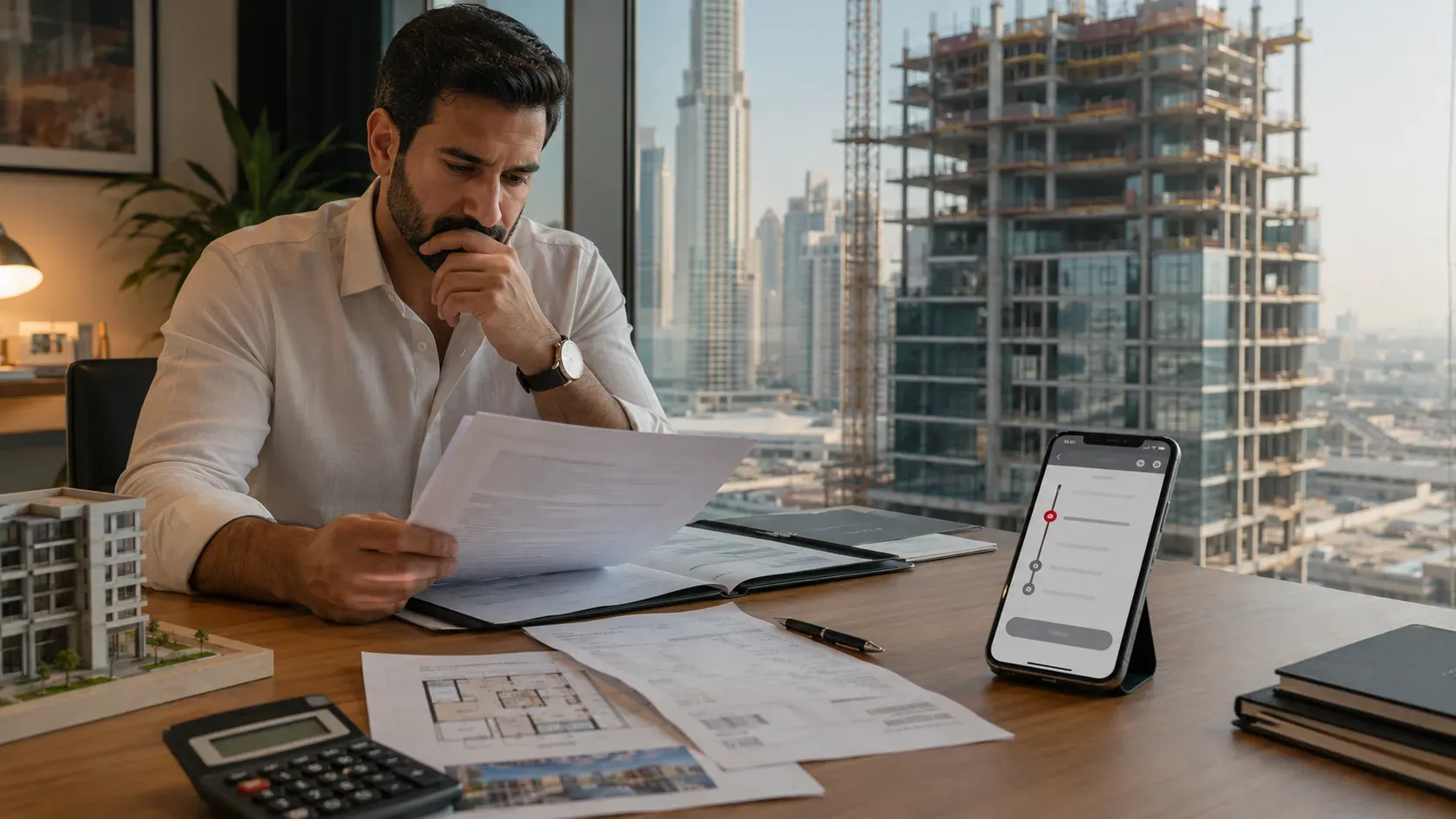
Yes, an off-plan property purchase in Dubai can sometimes be cancelled, but there is no general rule allowing a buyer to cancel simply because they have changed their mind and automatically receive all their money back.
The outcome depends on why you want to cancel, what your sale agreement says, how much you have paid, the project's completion status and whether the developer or buyer has breached the contract.
Dubai Land Department (DLD) has specific procedures for off-plan transactions. For example, DLD currently allows a developer to apply for termination of an investor's provisional registration when the investor has breached contractual obligations by failing to pay instalments, subject to specific notice and procedural requirements.
The situation is different when the project itself is cancelled. DLD explains that once a project is formally cancelled, its account moves into liquidation procedures and amounts paid by investors are handled through that process.
This guide explains when an off-plan purchase may be cancelled, what can happen to your payments and what you should do before attempting to exit the transaction.
Can You Cancel an Off-Plan Property Purchase in Dubai?
There is no universal buyer right to cancel an off-plan property purchase whenever you choose.
Your first step should be to identify why you want to cancel.
Common situations include:
- You can no longer afford the payment plan
- Your mortgage or financing did not work out
- The developer has breached the contract
- The project has been significantly delayed
- The project has been cancelled
- The developer and buyer mutually agree to terminate
- You discover a contractual or regulatory issue
- You want to exit the investment before completion
These situations can have very different consequences.
Your Sale and Purchase Agreement (SPA) is particularly important because it sets out the contractual relationship between you and the developer.
For more information about contracts, see Understanding the Sale and Purchase Agreement (SPA).
When Can You Cancel an Off-Plan Property Purchase in Dubai?
Cancellation may be possible in different circumstances, but the legal and financial consequences depend on the specific situation.
Mutual Cancellation
The buyer and developer may agree to terminate the contract.
If both parties agree, the settlement should clearly establish:
- Cancellation date
- Amount already paid
- Refund amount
- Any deductions
- Outstanding obligations
- Release of future payment obligations
- Treatment of registration or administrative charges
Do not rely only on a verbal agreement.
Get the cancellation and financial settlement properly documented.
Developer Breach
If the developer has failed to meet contractual obligations, the buyer may have potential remedies depending on the agreement and applicable Dubai laws.
Examples could include serious contractual failures, project problems or other circumstances covered by the agreement.
Project Cancellation
A project officially cancelled by the relevant authorities is a different situation from an individual buyer wanting to cancel.
DLD has specific procedures for cancelled projects and liquidation of project funds.
Buyer Default
If the buyer stops paying instalments, the developer may have contractual and regulatory procedures available to terminate the buyer's provisional registration.
DLD's current service specifically addresses investors who breach their contractual payment obligations under an off-plan sale contract.
Can You Cancel an Off-Plan Property if You Simply Change Your Mind?
Usually, you should not assume that changing your mind gives you an automatic right to cancel without financial consequences.
An off-plan purchase is a contractual commitment.
If you signed an SPA and agreed to a payment schedule, failing to make the payments can potentially place you in default.
The consequences can depend on:
- Contract terms
- Amount paid
- Project completion percentage
- Payment schedule
- Applicable law
- Notices issued by the developer
- Whether the developer has fulfilled its obligations
Therefore, simply stopping payments is generally not a sensible cancellation strategy.
If you are considering exiting an investment because the property no longer suits you, first review your contract and obtain appropriate professional advice.
What Happens if You Stop Paying for an Off-Plan Property?
Stopping payments does not automatically cancel the contract.
It can instead put the buyer into contractual default.
DLD's current provisional-registration termination service allows a developer to apply for deregistration where an investor has breached contractual obligations because of unpaid instalments.
The procedure contains specific requirements.
For example, DLD states that the buyer must have received or refused to receive the developer's warning for at least one month without making the required payment. The amount in the developer's warning must also correspond to the amount stated in the department's notice.
The developer's warning must also relate to the financial payments owed for the property itself and cannot simply add unrelated fines, registration fees, service fees or administrative charges to the amount claimed for this particular procedure.
This means a developer cannot simply treat every missed payment as an instant cancellation without following the applicable process.
Can a Developer Cancel Your Off-Plan Property Contract?
Yes, there are circumstances in which a developer can take steps to terminate an off-plan transaction because of buyer default.
DLD's current service specifically provides a mechanism for developers to seek termination of the buyer's provisional registration where the investor has failed to pay contractual instalments.
However, the developer must satisfy the relevant procedural requirements.
DLD lists documentation including:
- Relevant pages of the sale contract
- Payment schedule
- Developer warning
- Proof that the purchaser received the warning
- Identification documents
- Certain technical reports
- Evidence relating to required payments where applicable
So if you are struggling with payments, do not ignore notices from the developer.
Contact the developer promptly and determine whether a restructuring, payment arrangement or other contractual solution is possible.
What Happens to Your Money if an Off-Plan Project Is Cancelled?
This is different from a buyer individually cancelling their purchase.
DLD's FAQ explains that if an off-plan project is formally cancelled, the project's account is transferred to the project liquidation department. The department then requests the developer to return amounts paid by investors within 60 days from the cancellation decision, subject to the applicable process and possible extension. If the developer does not comply, the matter can be referred to court to protect investors' rights.
Dubai's regulations also provide procedures for refunding purchaser amounts following project cancellation.
Under Executive Council Resolution No. 25 of 2009, where RERA cancels a project, procedures include auditing the project's financial position and arranging refunds from the escrow account or developer. Where the escrow funds are insufficient, the developer is required to refund amounts owed within the prescribed period, subject to the applicable rules.
Therefore, project cancellation and buyer-requested cancellation should never be treated as the same thing.
Can You Get a Refund When Cancelling an Off-Plan Property?
Possibly, but the amount and timing depend on the circumstances.
A refund may be affected by:
- Why the contract is being terminated
- Whether the buyer or developer is at fault
- Project completion percentage
- Amount already paid
- Contractual provisions
- Applicable legislation
- Whether the project has been officially cancelled
- Whether the matter goes through a court or liquidation process
Dubai's legislation includes provisions dealing with developer termination following purchaser breaches and the amounts that may be retained or refunded depending on the circumstances.
This is why it is risky to rely on general claims such as:
"You will always get your full deposit back."
or:
"The developer can always keep everything."
Neither statement is universally correct.
The actual circumstances matter.
What Happens if an Off-Plan Project Is Delayed?
A delayed project does not automatically mean that a buyer can simply cancel and receive an immediate full refund.
First, determine:
- Contractual completion date
- Any permitted extension
- Actual construction progress
- Developer obligations
- Applicable regulatory status
- Whether the project remains active
- Whether the project has entered cancellation procedures
DLD explains that RERA monitors project progress and can take action where projects are stalled or construction progress is very limited. If appropriate corrective measures are not taken, procedures for project cancellation can be initiated.
This means buyers should distinguish between:
A delayed project
and
A formally cancelled project.
The legal consequences can be very different.
What Happens if an Off-Plan Project Is Under Cancellation?
This is another situation where buyers need to be careful.
DLD explains that when a project has not yet been cancelled but is under cancellation, DLD does not have authority to terminate the developer-investor contract simply because the investor requests it. The investor seeking termination may need to approach the competent real estate court. DLD's role can include attempting to reconcile the parties and settle the dispute amicably.
DLD also notes that the cancellation process itself can involve several stages, including grievances and committee review, and may take at least several months.
Therefore, do not confuse:
- Project delayed
- Project under cancellation
- Project cancelled
They are three different situations.
How Does Dubai Land Department Handle Off-Plan Contract Cancellation?
DLD has different procedures depending on what has happened.
For example, DLD's Request for Termination of Initial Registration service is specifically designed for developers seeking deregistration of provisional registration because an investor has breached contractual obligations through non-payment.
The service is handled through the relevant DLD/Oqood system and involves submission of supporting documentation and review by the competent authority.
DLD also has a separate Project Cancellation Upon Request service for developers seeking deregistration of an entire real estate development project. That process requires the developer to complete settlements with investors and meet other cancellation requirements before the application can proceed.
These separate services demonstrate why the phrase "cancel an off-plan property" can refer to very different legal situations.
What Should You Check Before Cancelling an Off-Plan Property?
Before sending a cancellation request, collect all relevant documents.
Review Your SPA
Look specifically for:
- Cancellation clauses
- Default provisions
- Payment schedule
- Developer obligations
- Completion provisions
- Refund provisions
- Dispute-resolution clauses
Check How Much You Have Paid
Calculate your total payments and separate:
- Purchase payments
- Registration fees
- Administrative fees
- Service charges
- Other payments
Do not assume every payment is treated identically.
Check Project Status
Confirm whether the project is:
- Active
- Under construction
- Delayed
- Under cancellation
- Cancelled
DLD provides official project and transaction systems that can help buyers verify relevant information.
Check Your Oqood/Registration Position
DLD provides an initial-sale registration process through Oqood for units sold off-plan before the purchase price has been fully paid.
Understanding your registration position can be important when discussing cancellation.
Obtain Professional Advice
If a substantial amount has already been paid, consider obtaining advice from a qualified UAE property lawyer before sending a termination notice.
How Can Buyers Protect Themselves When Buying Off-Plan in Dubai?
The best cancellation strategy is prevention.
Before buying, research the developer and project carefully.
Verify the Project
DLD provides a process for registering real estate projects and opening escrow accounts for off-plan sales.
Understand the Escrow Structure
DLD defines the real estate escrow account as the project account into which amounts from purchasers of off-plan units are deposited.
Research the Developer
Look at:
- Previous projects
- Delivery record
- Construction progress
- Project registration
- Reputation
- Financial strength
- Customer complaints
See How to Choose the Right Property Developer for a broader developer-selection guide.
Read the Payment Plan Carefully
Do not focus only on the headline purchase price.
Understand:
- Initial payment
- Instalments
- Construction-linked payments
- Handover payment
- Post-handover payments
- Registration charges
Understand the Exit Position
Before signing, ask what happens if you:
- Cannot make an instalment
- Want to sell your position
- Need to cancel
- Face financing problems
- Experience a project delay
Getting these answers before signing is much easier than trying to negotiate after a dispute begins.
What If You Want to Exit Because You Cannot Afford the Next Payment?
Do not simply stop paying.
Contact the developer before the payment deadline if possible.
You may be able to discuss:
- Payment-plan restructuring
- Extension
- Settlement
- Transfer options
- Other contractual solutions
The options depend on the developer and contract.
Ignoring the payment may trigger the developer's contractual default procedures.
DLD's current process shows that developers can seek provisional deregistration where investors breach their payment obligations, subject to specific notices and requirements.
What If You Want to Cancel Because the Project Is Not Progressing?
First verify the project's actual status.
Do not rely solely on:
- Social media comments
- WhatsApp groups
- Online rumours
- Unofficial property forums
- Statements from unrelated agents
Use official information where available.
DLD explains that RERA monitors project progress and can initiate cancellation procedures for projects that are stalled or have insufficient progress where corrective measures are not taken.
If the project has merely been delayed, your rights may differ from those available after a formal cancellation.
Common Mistakes to Avoid When Cancelling an Off-Plan Property
Stopping Payments Without Notice
This can potentially put you into contractual default.
Assuming the Deposit Is Automatically Refundable
The refund depends on the circumstances and applicable contractual and legal provisions.
Confusing Project Cancellation With Personal Cancellation
A formally cancelled project is not the same as a buyer asking to exit an active project.
Ignoring Developer Notices
A missed warning or deadline can make your position more difficult.
Signing a Settlement Without Understanding It
Read any cancellation agreement carefully before signing.
Relying on Verbal Promises
Get refund amounts, dates and cancellation conditions in writing.
Assuming DLD Can Cancel Every Contract
DLD specifically explains that in certain project-cancellation situations it does not have authority to terminate the developer-investor contract merely at the investor's request.
Waiting Too Long
If you believe the developer has breached the agreement, obtain professional advice promptly.
Off-Plan Property Cancellation Checklist
Check | What to Review |
|---|---|
SPA | Cancellation and default clauses |
Payment plan | Amounts already paid and amounts due |
Project status | Active, delayed, under cancellation or cancelled |
Oqood | Initial registration status |
Developer | Contractual obligations and notices |
Escrow | Relevant project escrow arrangements |
Refund | Amount potentially recoverable |
Notices | Developer warnings and correspondence |
Dispute clause | Court, arbitration or other process |
Settlement | Written cancellation terms |
Legal advice | Consider professional advice for significant disputes |
Frequently Asked Questions
Can I cancel an off-plan property purchase in Dubai?
It may be possible, but there is no universal right to cancel without consequences. The contract, reason for cancellation, project status and applicable Dubai regulations all matter.
Can I cancel an off-plan property if I simply changed my mind?
You should not assume that you can cancel without financial consequences. A signed SPA creates contractual obligations, and the consequences of withdrawal depend on the agreement and circumstances.
What happens if I stop paying my off-plan instalments?
Stopping payments can place you in contractual default. DLD has a specific procedure allowing developers to seek termination of provisional registration for investors who breach payment obligations, subject to required warnings and other conditions.
Can the developer cancel my off-plan property?
A developer can have termination rights when a buyer breaches contractual payment obligations, but applicable procedures must be followed. DLD's current provisional-deregistration service sets out specific requirements.
Will I get my money back if an off-plan project is cancelled?
DLD states that when a project is formally cancelled, the account moves to the project liquidation department, which requests the developer to return amounts paid by investors within the applicable period. If the developer does not comply, the matter can be referred to court.
What if the project is under cancellation but has not been cancelled yet?
DLD states that it does not have authority to terminate the developer-investor contract simply at the investor's request in this situation. An investor seeking termination may need to approach the competent real estate court.
Can I cancel because the project is delayed?
A delay does not automatically mean you can cancel and receive a full refund. Check the SPA, project status and applicable legal provisions before taking action.
What is Oqood?
Oqood is DLD's system used for registering certain off-plan sales in the provisional register. DLD's initial-sale registration service allows developers to register units sold off-plan before the purchase price has been fully paid.
Should I stop paying if I want to cancel?
Do not simply stop paying without understanding your contractual position. A missed payment can potentially trigger developer default procedures.
Should I hire a lawyer to cancel an off-plan property?
For a significant investment, disputed cancellation, substantial refund or alleged developer breach, obtaining advice from a qualified UAE property lawyer can help you understand your contractual and legal position.
Final Thoughts
Yes, an off-plan property purchase in Dubai can be cancelled in some circumstances, but cancellation is not automatically available simply because a buyer changes their mind.
The most important factors are the SPA, reason for cancellation, project status, payment history and applicable Dubai regulations.
If the buyer stops paying instalments, the developer may be able to pursue provisional deregistration through DLD's established procedure after meeting the required notice and documentation requirements.
If the project itself is formally cancelled, the situation is different. DLD explains that the project enters liquidation procedures and amounts paid by investors are handled through the applicable refund process.
If a project is merely under cancellation, rather than formally cancelled, DLD says an investor seeking termination may need to approach the competent real estate court.
The safest approach is therefore not to stop payments or send a cancellation request impulsively. First review your SPA, verify the project's current status, document your payments and communications, and understand what cancellation could mean financially.
Most importantly, get professional advice before taking action if a substantial amount of money is involved or you believe the developer has breached the contract.
For buyers who have not yet purchased, careful developer and project due diligence can reduce the risk of facing a cancellation dispute in the first place.

Dubai Real Estate
Ready to find your
dream home in Dubai?
Browse thousands of properties across Dubai's most sought-after neighbourhoods. Our experts are ready to guide you.